

J’avais inscrit au calendrier ce 29 août deux sorties au départ de Gaillac.
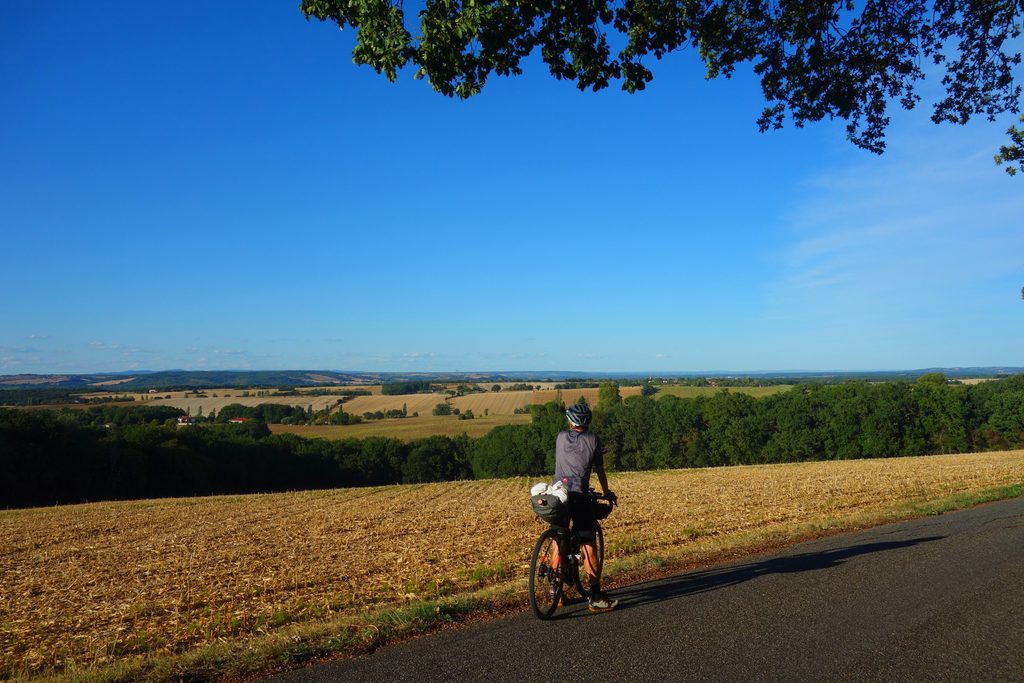
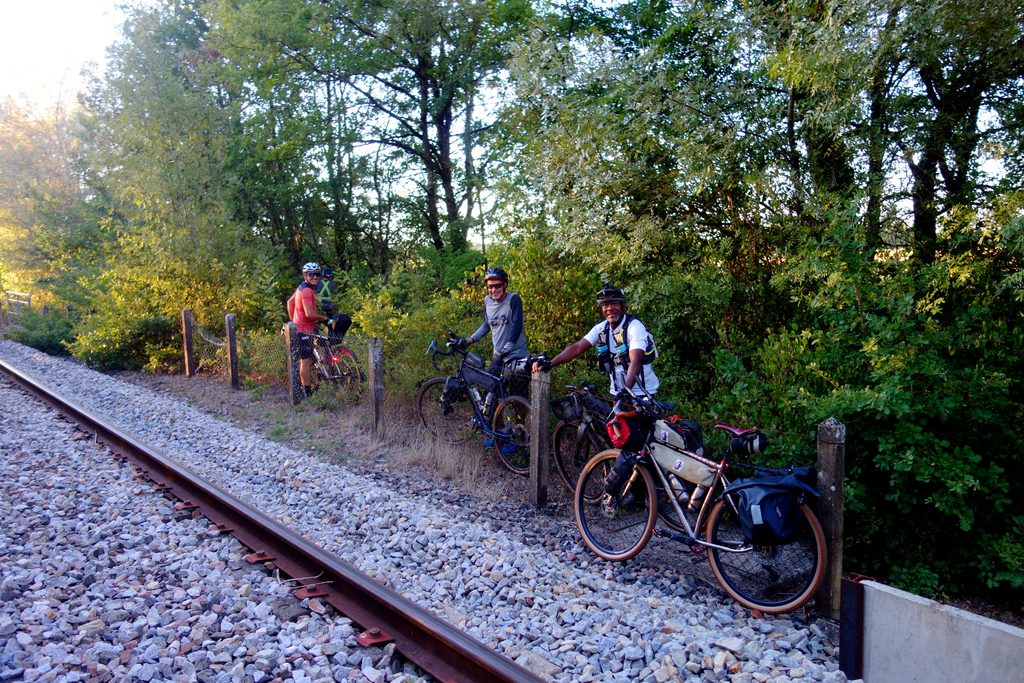
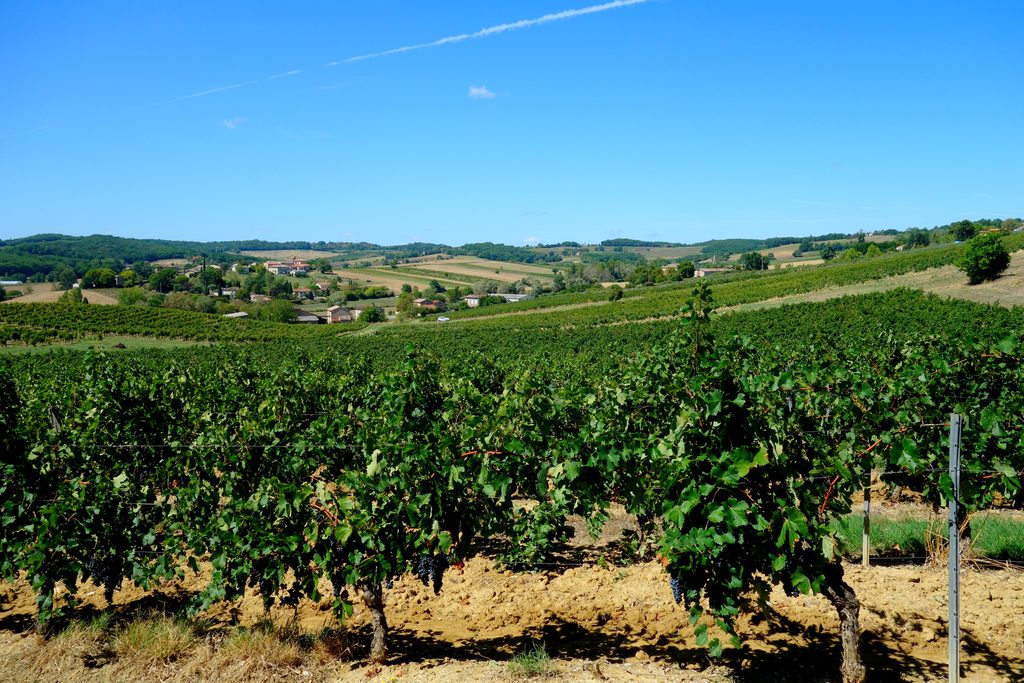
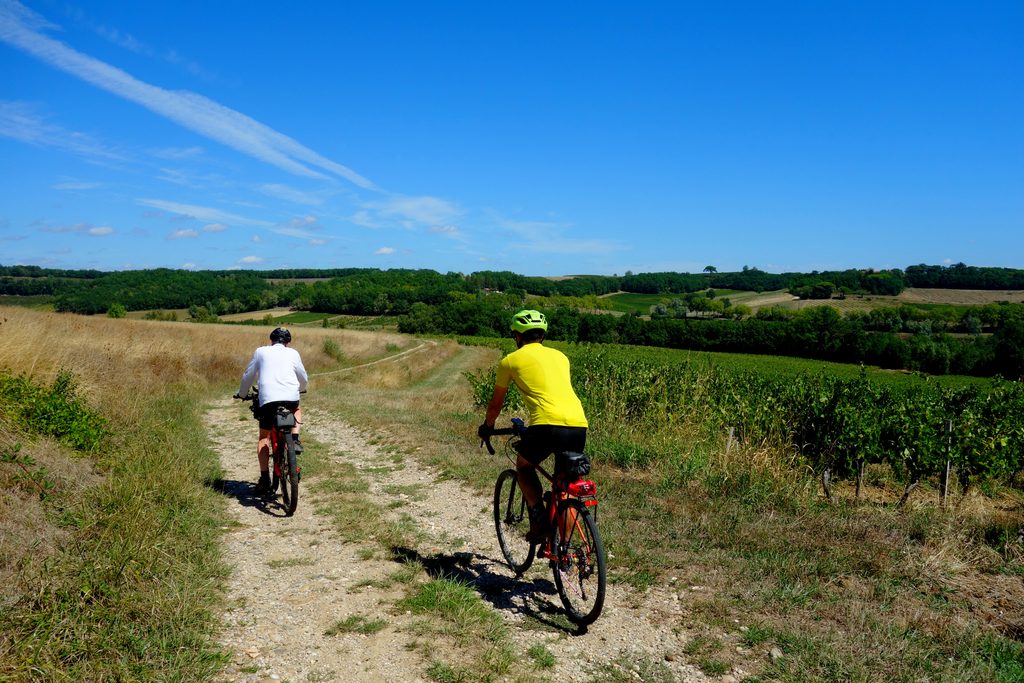
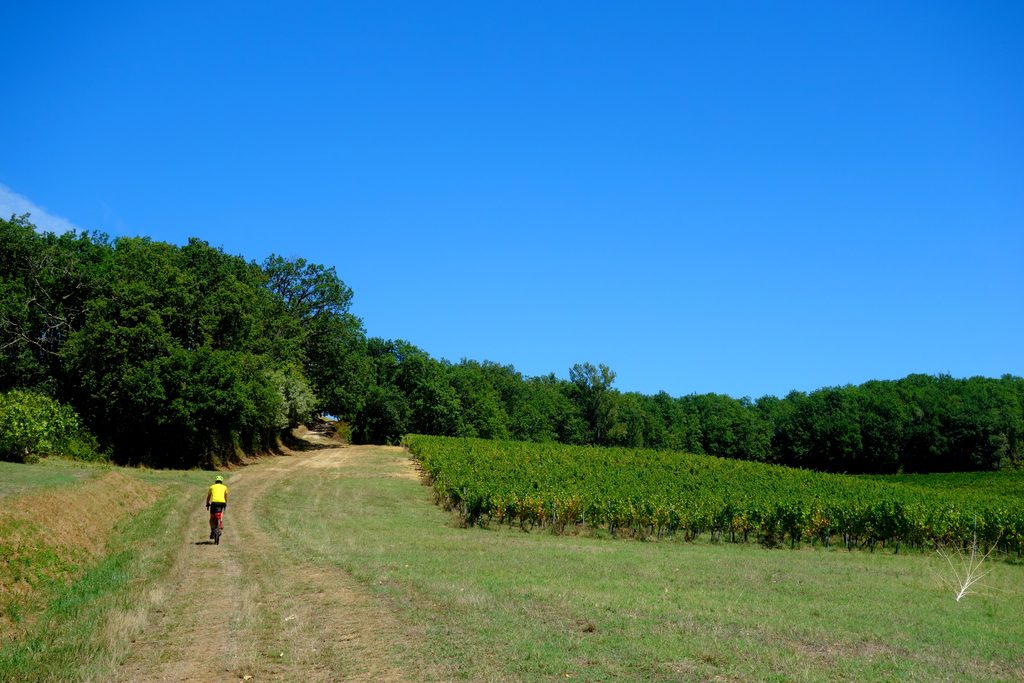
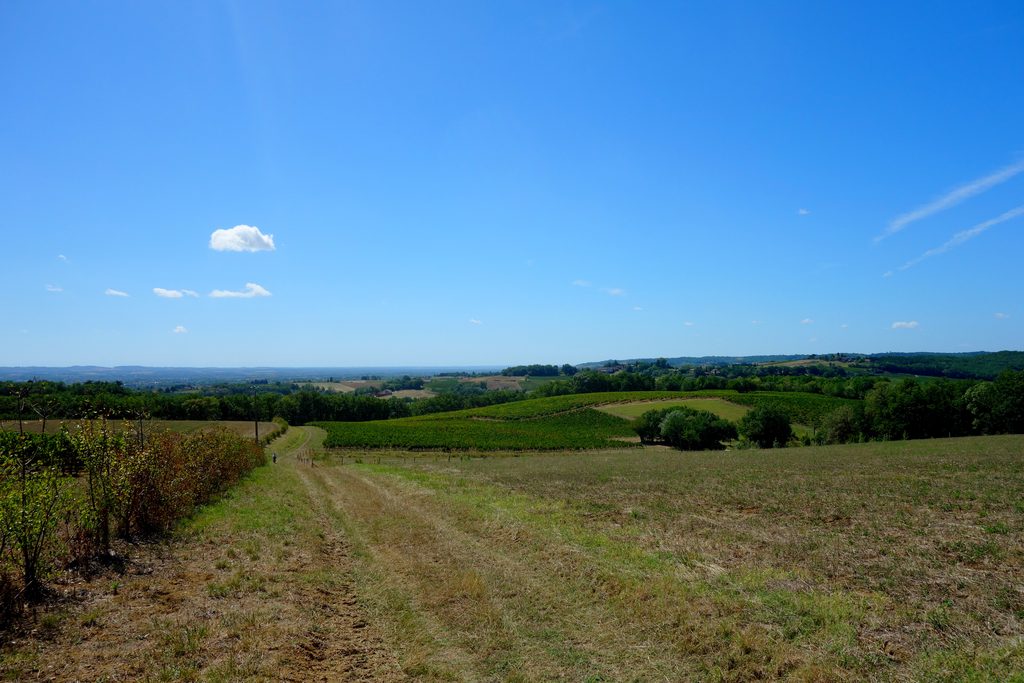
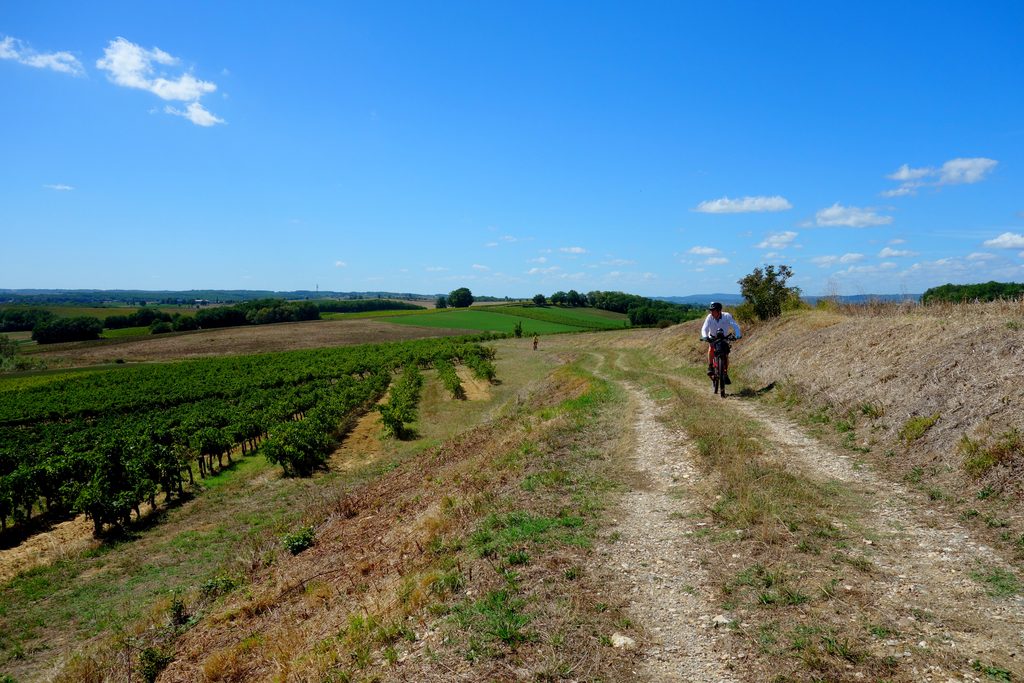
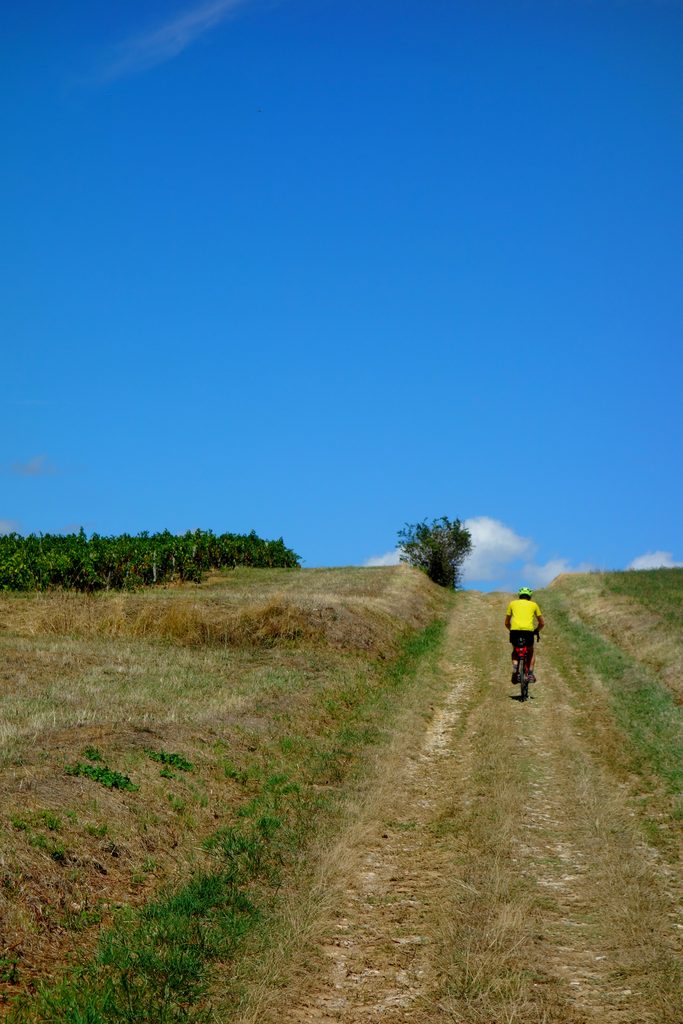
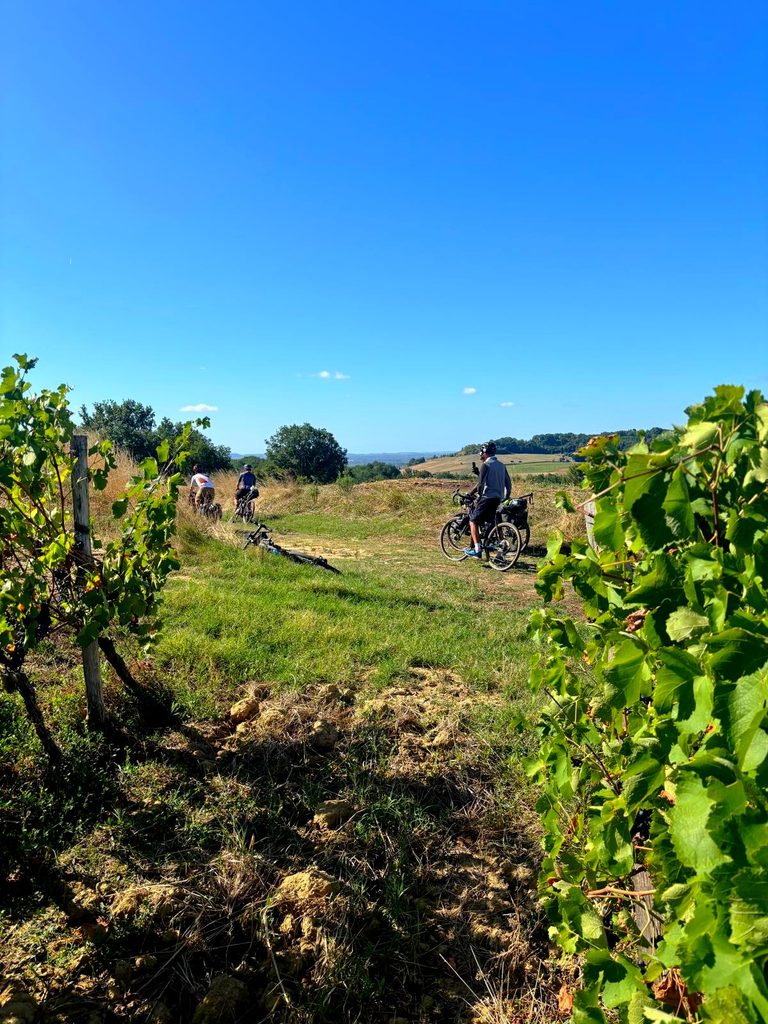
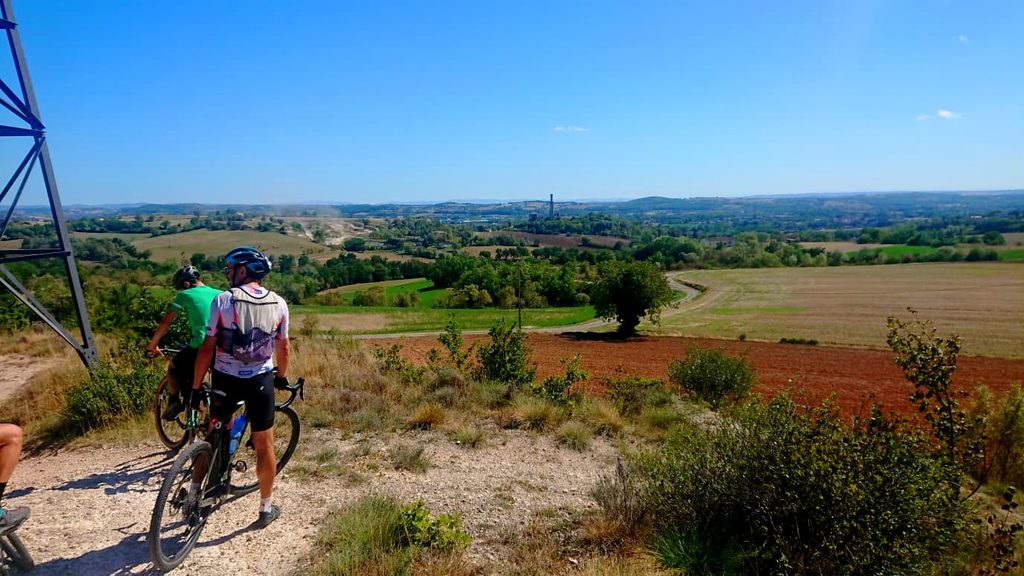
Gaillac est réputée pour son vignoble, ses coteaux et villages alentours sont aussi très jolis, les sentiers de randonnée ne manquent pas, certains vous font prendre un peu de hauteur, les panoramas sont superbes. Les terrains sont variés : pistes herbeuses, terre, quelques pistes blanches, un peu de cailloux par endroits, pas trop de passages techniques.
Les deux balades proposées suivent en partie des chemins de randonnée balisés (les Hauts de Gaillac, le Sentier des quatre châteaux, Entre Vignobles et Châteaux, et GR 46 notamment). Le circuit familial du matin est tiré du topoguide (excellent !) « Boucles à vélo autour de Toulouse » aux Éditions Chamina. On peut le qualifier de musclé (environ 350m de D+ cumulé pour une vingtaine de kilomètres) et je n’avais pas, comme j’essaie de le faire souvent, préparé d’itinéraire bis pour les enfants ou les adultes un peu moins aguerris … S’il avait fallu, j’aurais proposé un deuxième circuit plus familial avec une seule prise de hauteur, la balade du matin en proposait trois avec des pourcentages conséquents, mais les panoramas et les chemins valent vraiment le détour et quand il faut se le gagner c’est encore plus beau !
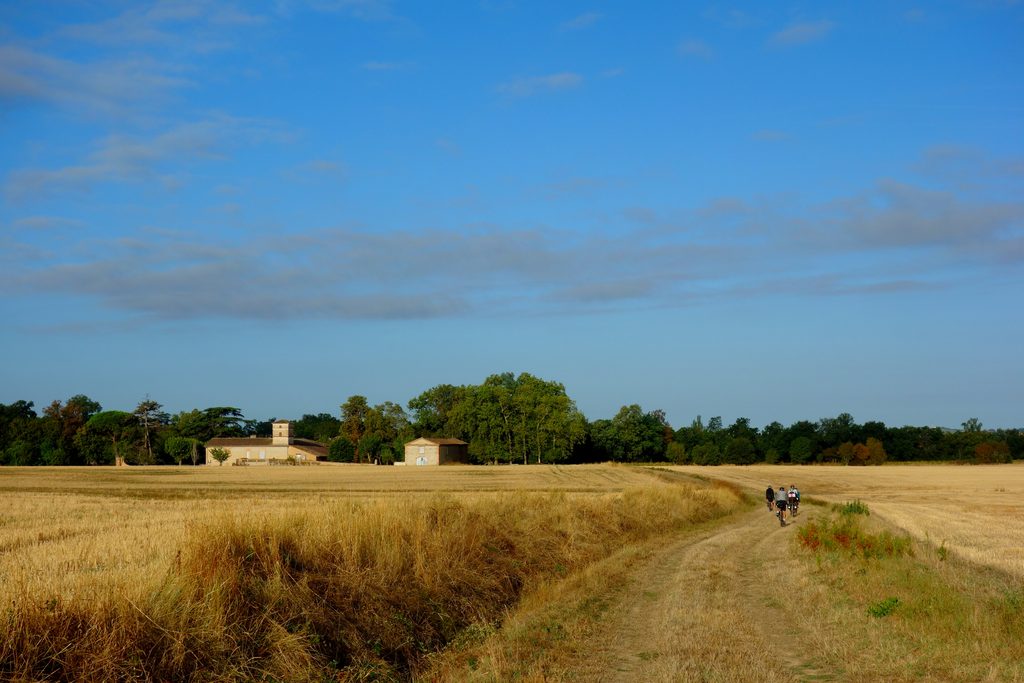
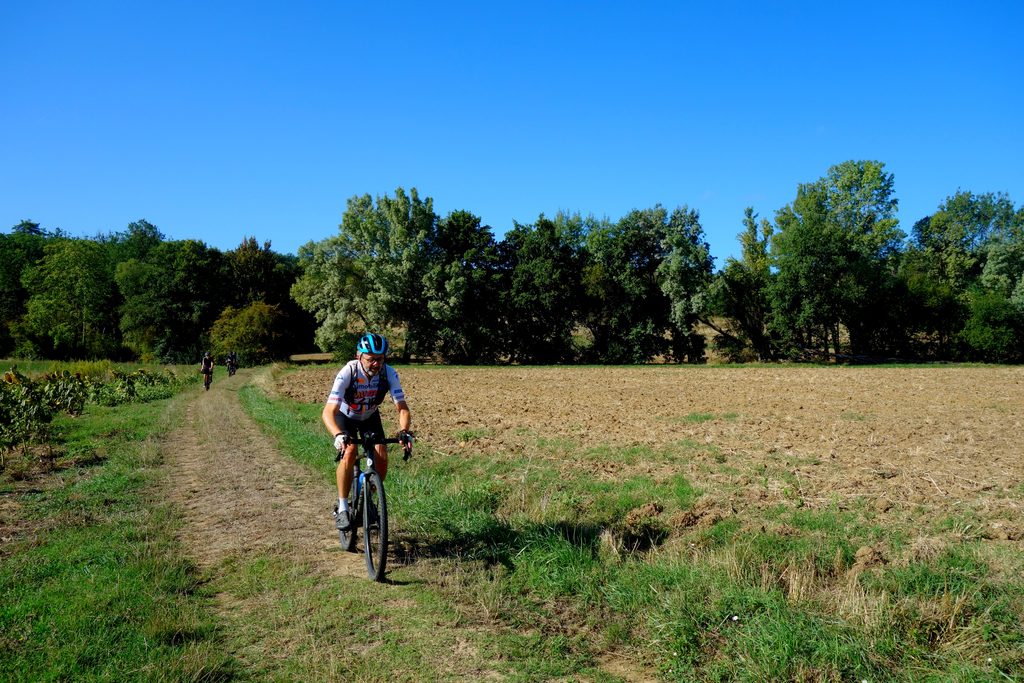
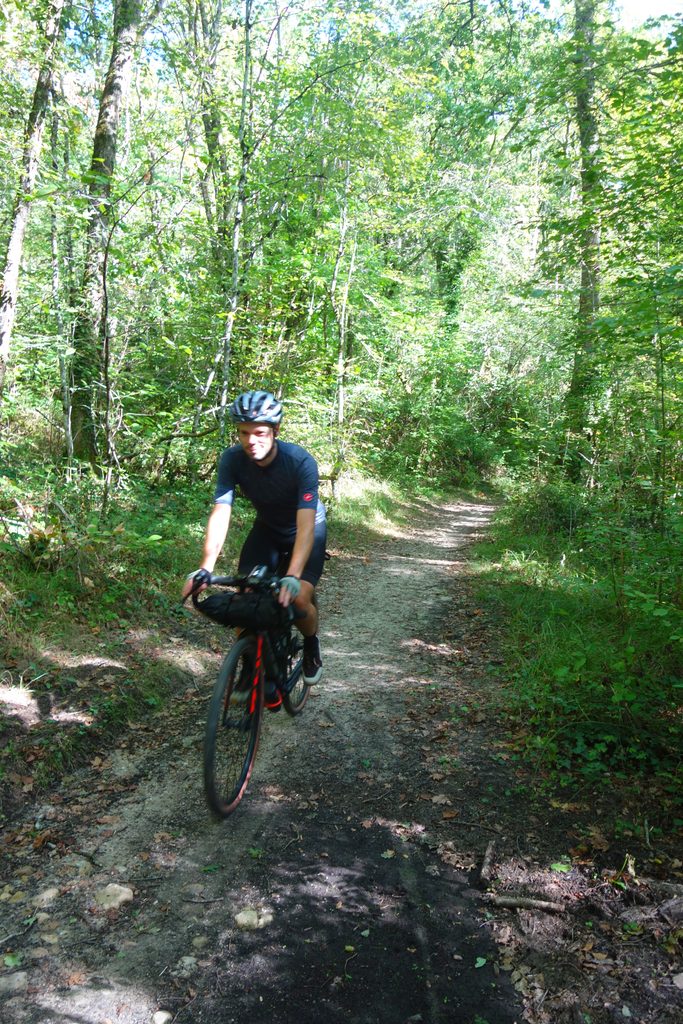
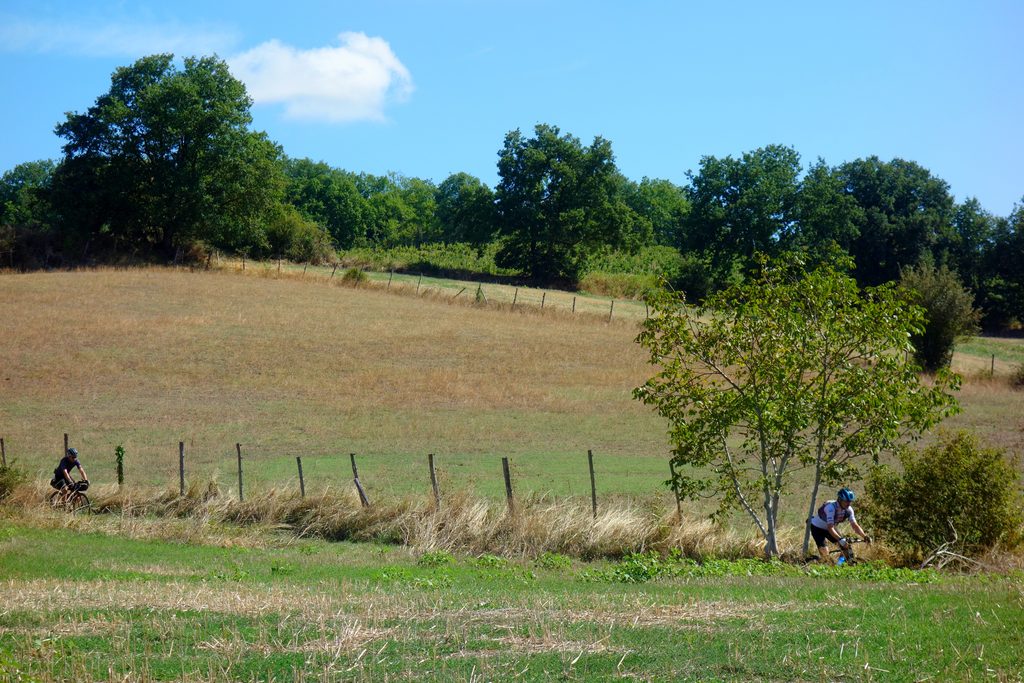
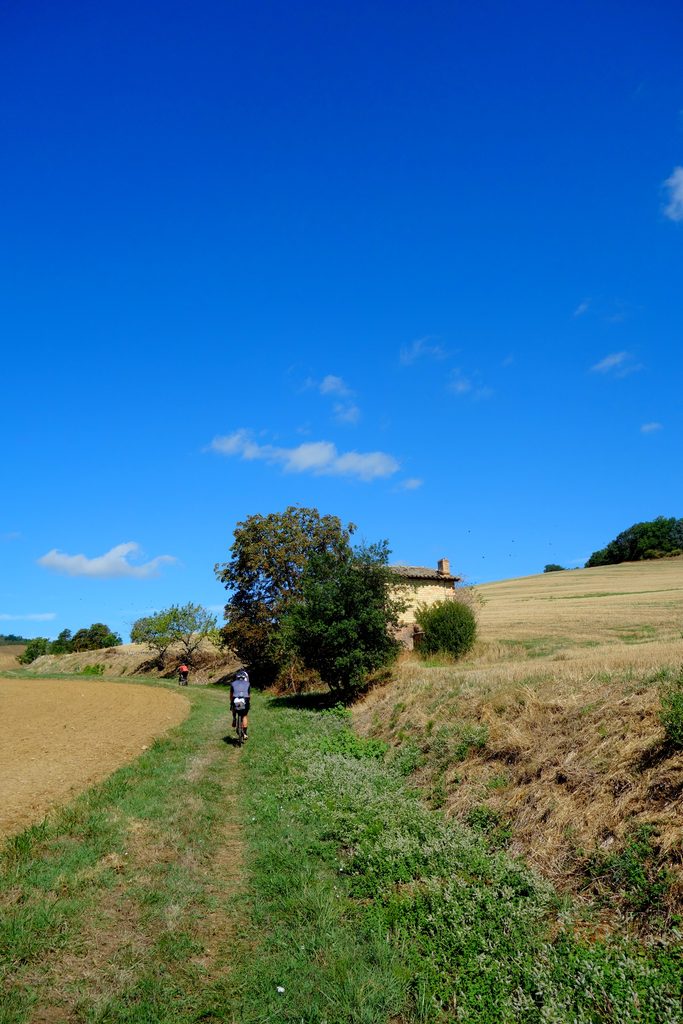
Alternance de portions de petites routes peu fréquentées, de pistes herbeuses, peu de cailloux le matin, entre vignes (les vendanges ont commencé), cultures et sous-bois.
Nous avons toujours besoin de comparer un vécu, un site, à quelque chose de connu. J’appelle souvent le Pic de Nore le Ventoux de la Montagne Noire car la météo au sommet peut être très variable.
Il y a en France une bonne trentaine de Venise : le marais poitevin est la Venise verte, La Canourgue la Venise lozérienne, Montargis la Venise du Gâtinais, Amiens la Venise du Nord, Narbonne la Venise de la Méditerranée, etc.
Il y a quelques années, le syndicat mixte regroupant les territoires touristiques de Gaillac et Cordes-sur-Ciel a créé la marque « La Toscane Occitane » pour promouvoir 81 communes de l’ouest du Tarn. Le choix faisait référence aux paysages de vignes, de cyprès, aux villages perchés et au patrimoine médiéval.
Les Italiens n’ont pas apprécié ce détournement touristique et marketing, une véritable querelle diplomatique sur ce sujet a opposé Italie et France jusqu’aux bancs du Parlement européen. Finalement, en novembre 2023, le syndicat a changé de dénomination institutionnelle pour devenir « Gaillac, Cordes-sur-Ciel & Cités médiévales », notamment en raison des « incompréhensions italiennes ». Mais la marque touristique « La Toscane Occitane » a été conservée.
Je connais bien ce territoire, je l’affectionne particulièrement, il n’a pas besoin de comparaison et même si certains points communs le relient à la Toscane italienne (le territoire très vallonné, les vignes, les villages perchés) le cyprès est quasi-inexistant en France (il est pour moi un véritable symbole de la Toscane) et nous n’avons pas les strade bianche ou très peu … « Venise », « Colorado », « Toscane » sont certainement vendeurs … N’avons-nous pas en France un Colorado provençal ou des Petit Canada ?
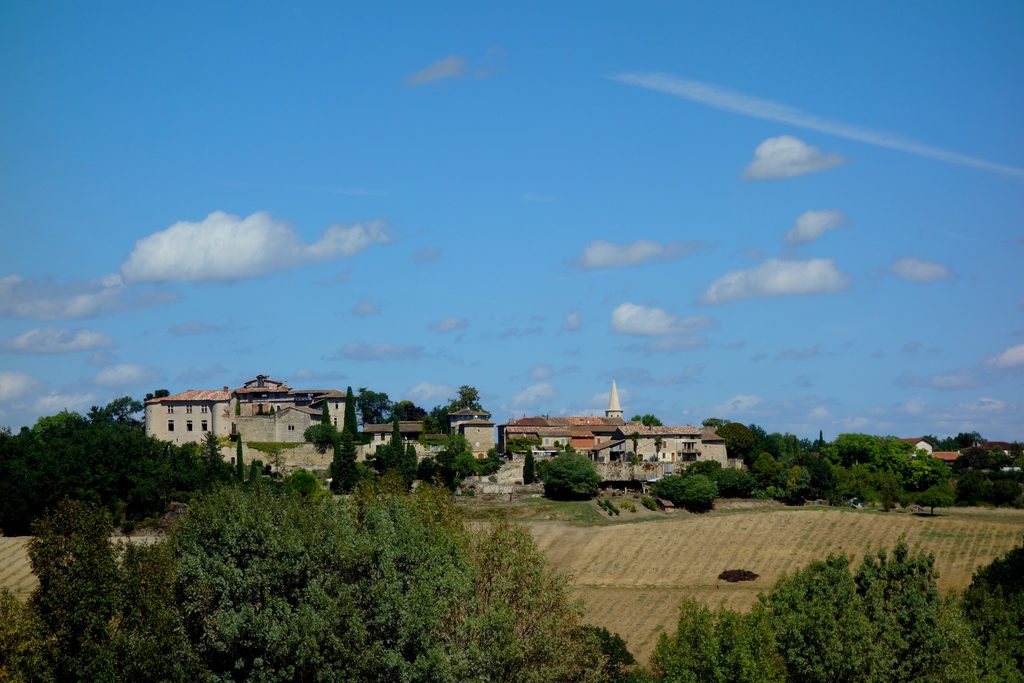
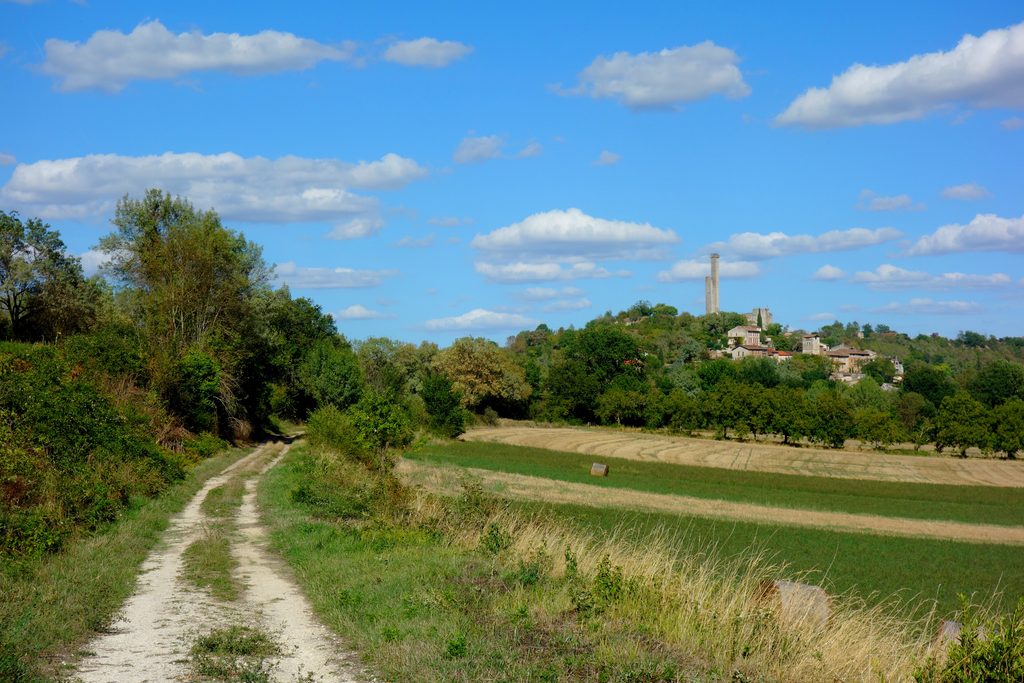
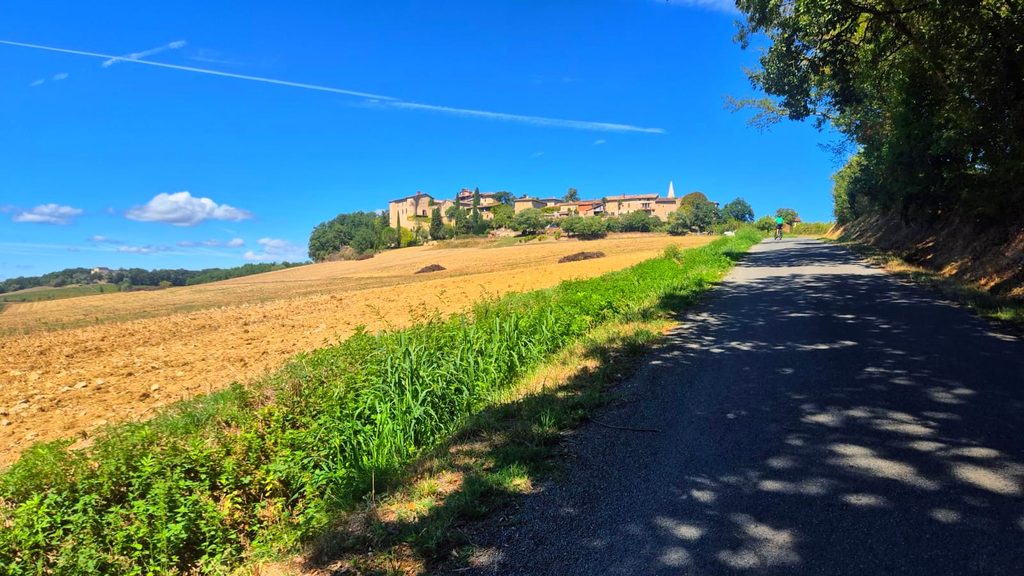
Ce coin que j’appelle plutôt les bastides tarnaises mérite vraiment le détour et la halte : il est riche naturellement et historiquement. C’est d’ailleurs un château que j’ai voulu mettre à l’honneur, celui de Castelnau-de-Lévis, si particulier avec sa tour carrée … Je voyais souvent cette drôle de silhouette de loin en roulant sur l’autoroute vers Albi, de loin on pouvait penser à une cheminée ou une architecture industrielle. C’est grâce au vélo que j’y suis passé un jour et me suis intéressé à son histoire …
Perché sur un éperon rocheux dominant la vallée du Tarn, le château a été fondé en 1235 par Sicard Alaman, puissant seigneur et proche de Raymond VII, comte de Toulouse. D’abord appelé Castelnau-de-Bonnafous, il constituait un bastion des possessions toulousaines face au domaine royal. Un village fortifié se développa au pied de ses murailles.
La seigneurie devint une importante baronnie de l’Albigeois. Au XVe siècle, elle passa aux Armagnac, puis aux Amboise-Aubijoux. Au XVIe siècle, le château fut remanié et embelli. La Révolution mit fin à la baronnie et la commune prit provisoirement le nom de Castelnau-du-Tarn. Le nom de Castelnau-de-Lévis fut adopté au XIXe siècle, en souvenir de la famille qui avait possédé la seigneurie.
Vendu en 1818, le château fut malheureusement exploité comme carrière. Ses ruines, dominées par une impressionnante tour de près de 40 mètres, furent classées en 1909. La commune en fit l’acquisition en 1991 et entreprit depuis, avec une association de sauvegarde, sa restauration et sa mise en valeur. Aujourd’hui, le château et le vieux village constituent un remarquable témoignage de l’histoire médiévale de l’Albigeois.
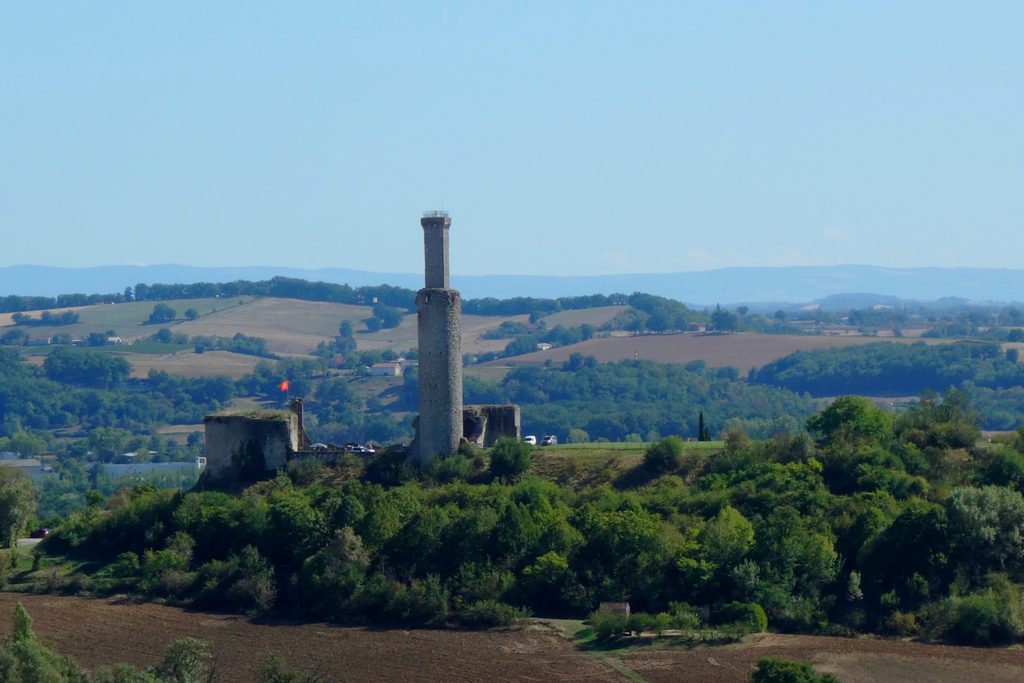
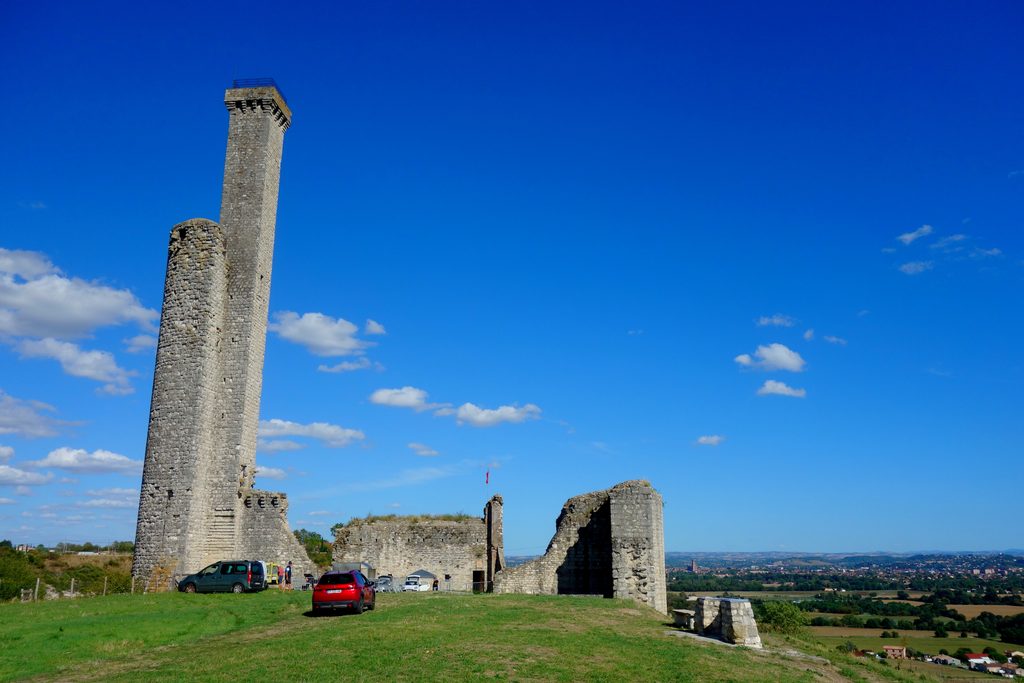
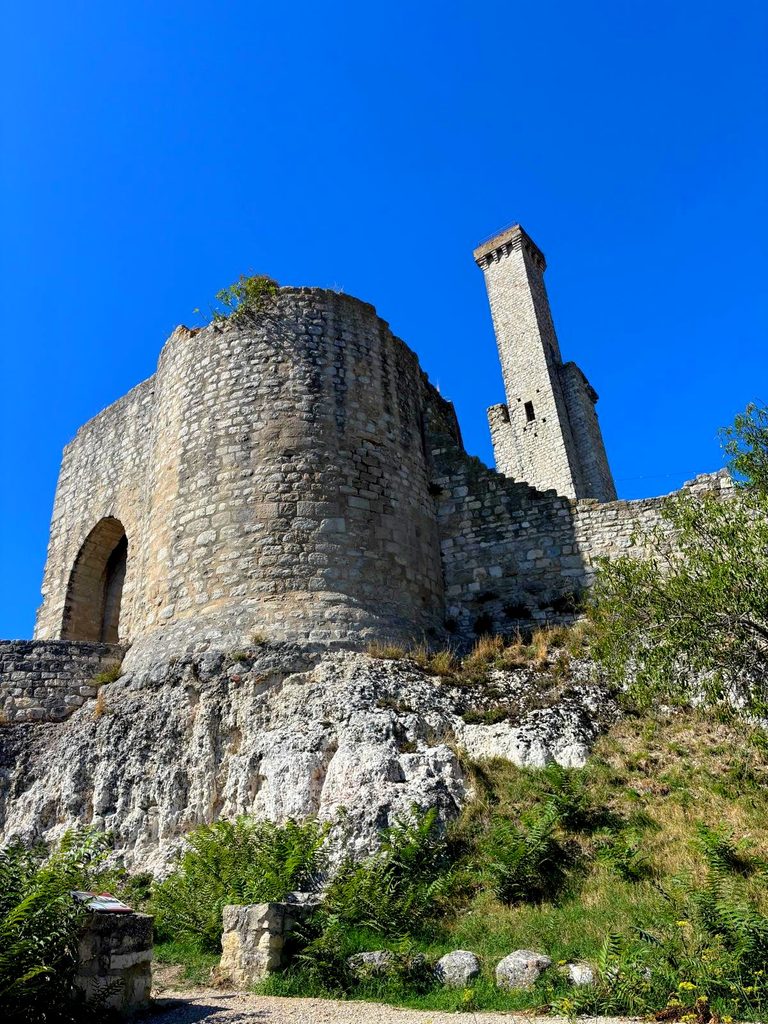
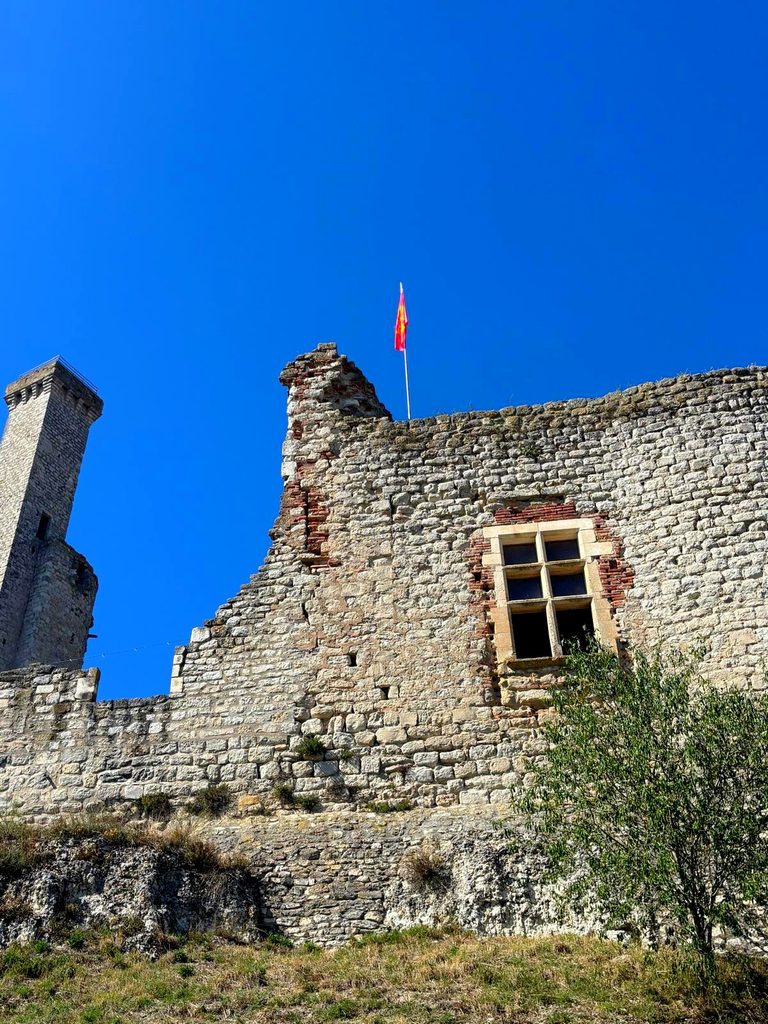
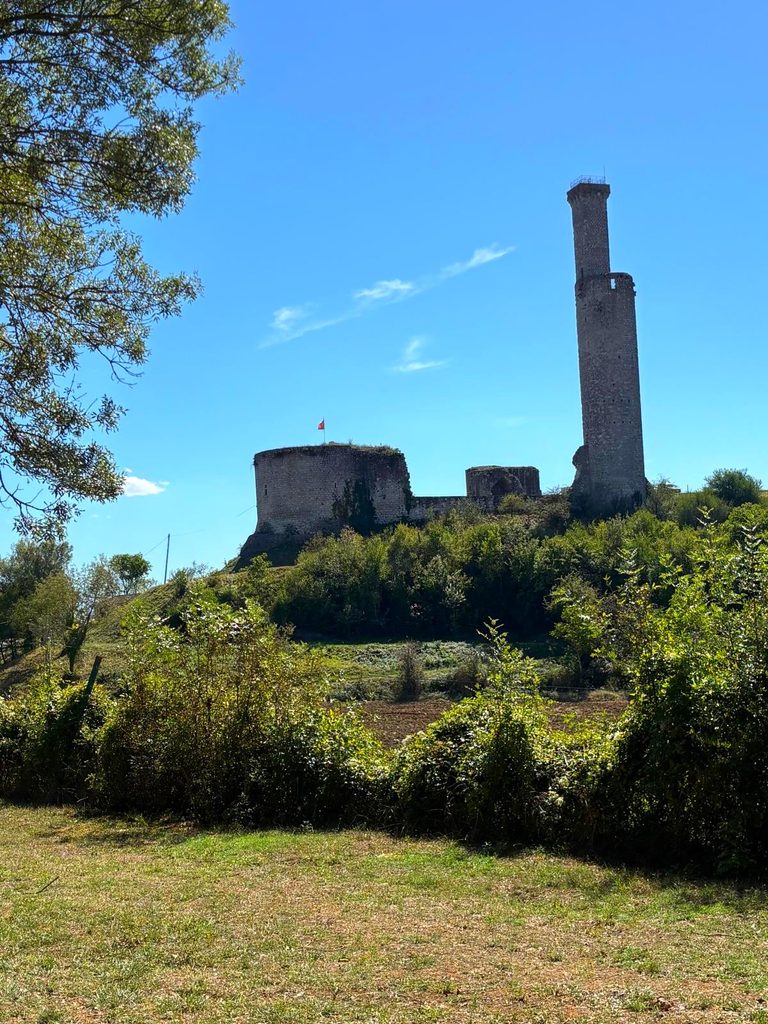
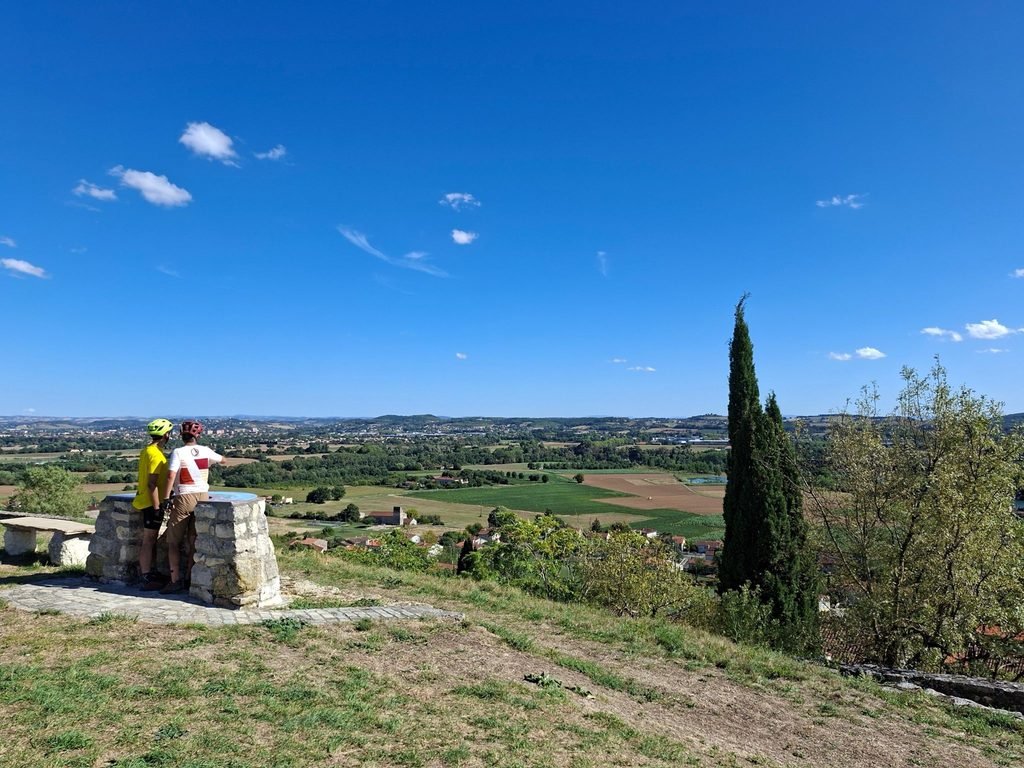
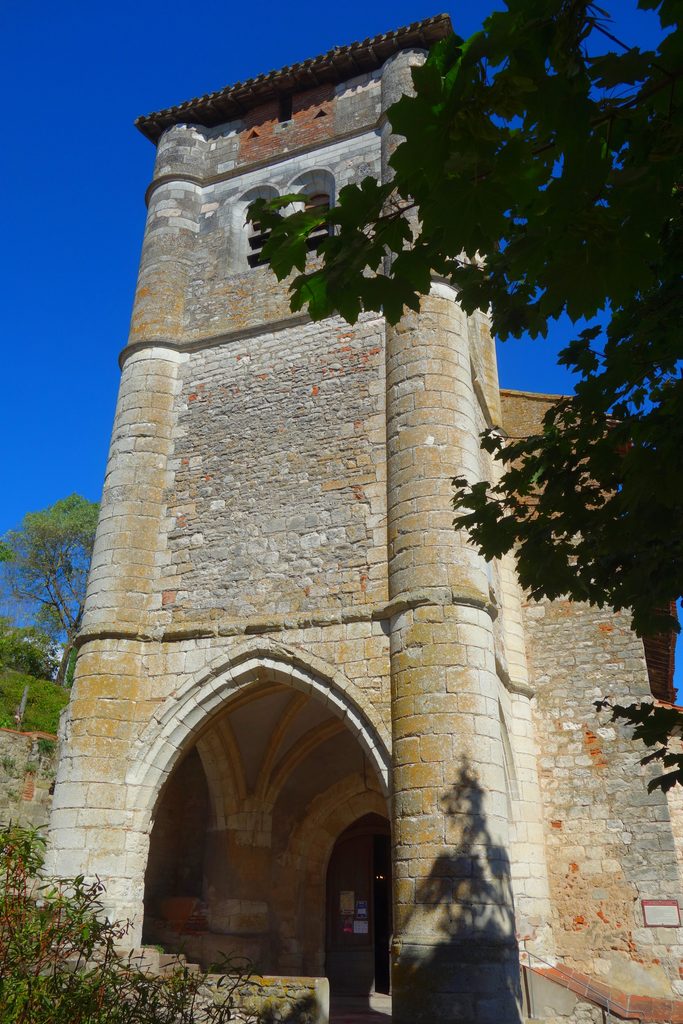
Une fois n’est pas coutume, j’ai découvert comme mes camarades cette magnifique liaison entre Gaillac et Castelnau-de-Lévis. Je passe pas mal de temps sur tous mes tracés et là j’avais bien fait attention à vérifier avec les vues satellites et le petit bonhomme de Street view que ça passait bien partout. Je commence à avoir une certaine expérience en lecture de cartes, en ajoutant à cette lecture les vues satellites, en changeant les fonds de carte, en utilisant le petit bonhomme, je suis rarement déçu …
La quasi-totalité du dénivelé positif cumulé de la balade de l’après-midi (environ 650 m pour 51 km) s’est trouvé sur l’aller au château, le retour s’est fait au plus près du Tarn, sur plus de bitume en suivant en partie la Véloroute de la Vallée du Tarn entre Albi et Saint-Sulpice-la-Pointe.
Cinq membres de l’association ont fait la balade le matin, cinq autres les ont rejoint pour la balade de l’après-midi.
Mention spéciale à la Maison Chavanne à Gaillac, Boulangerie-pâtisserie, pour la qualité de ses produits, nous nous y sommes restaurés le matin et le midi.
Le un peu plus avant et après … Comme souvent les membres de l’association viennent aux rendez-vous à vélo ou en train.
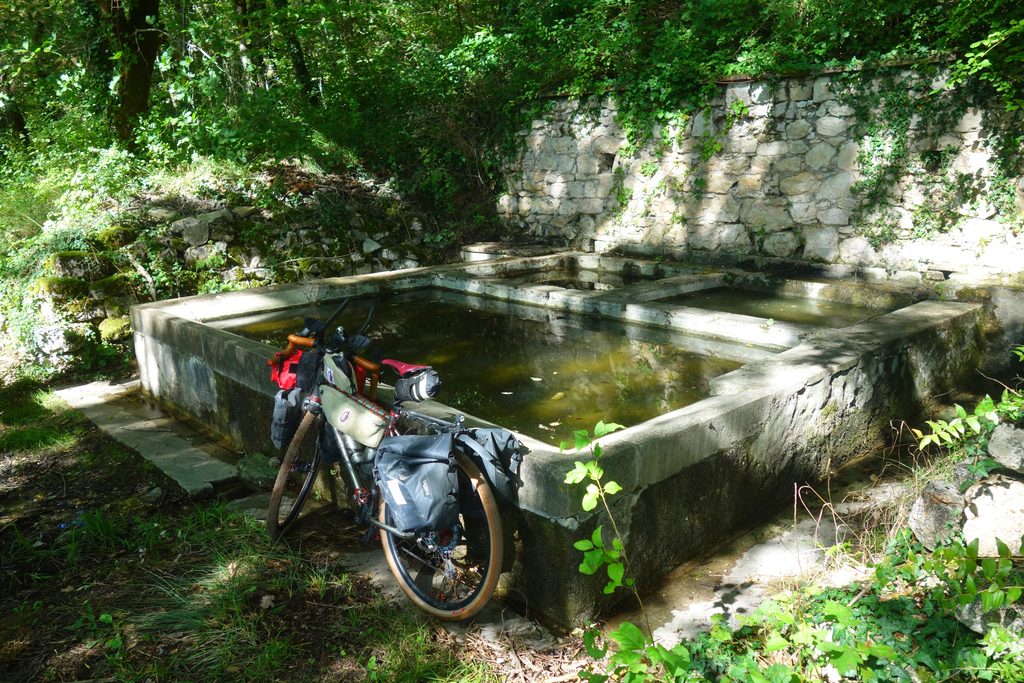
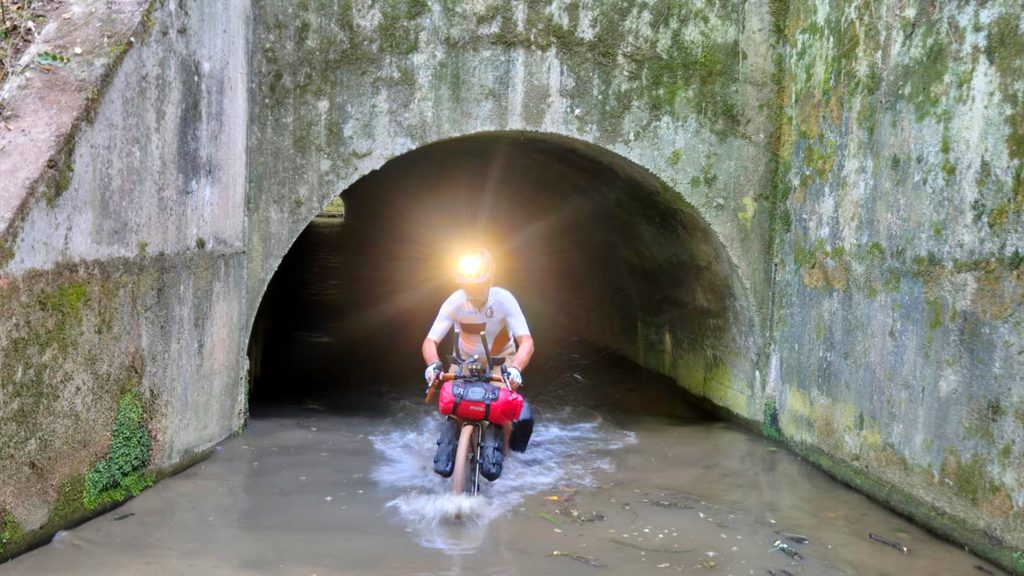
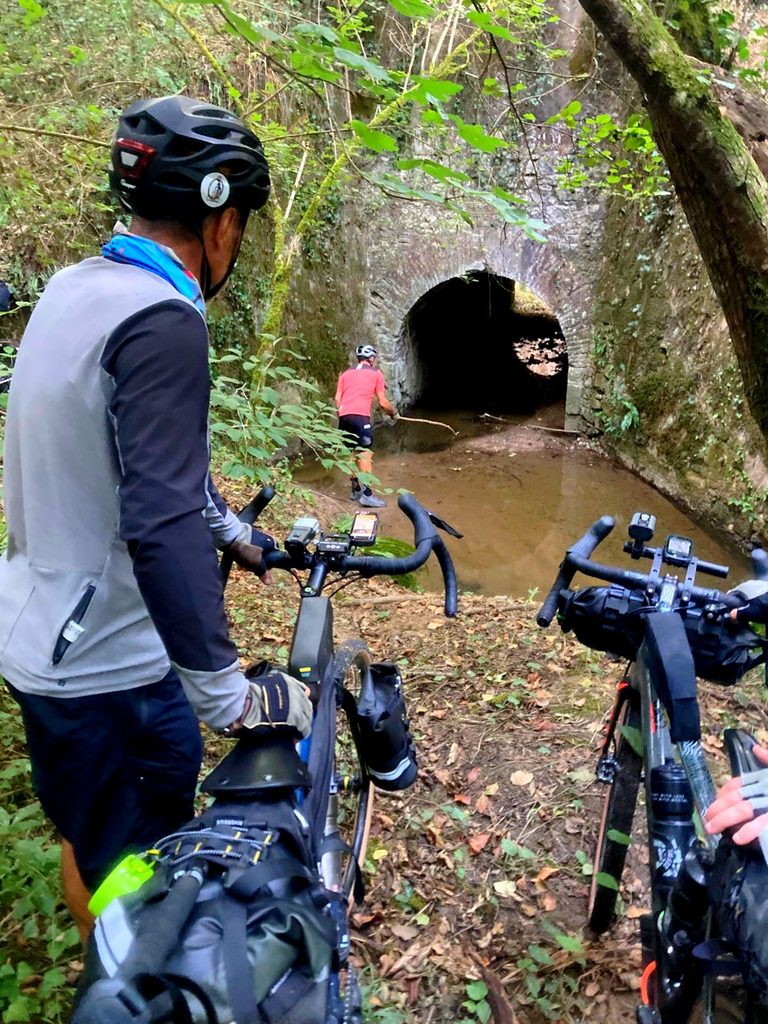
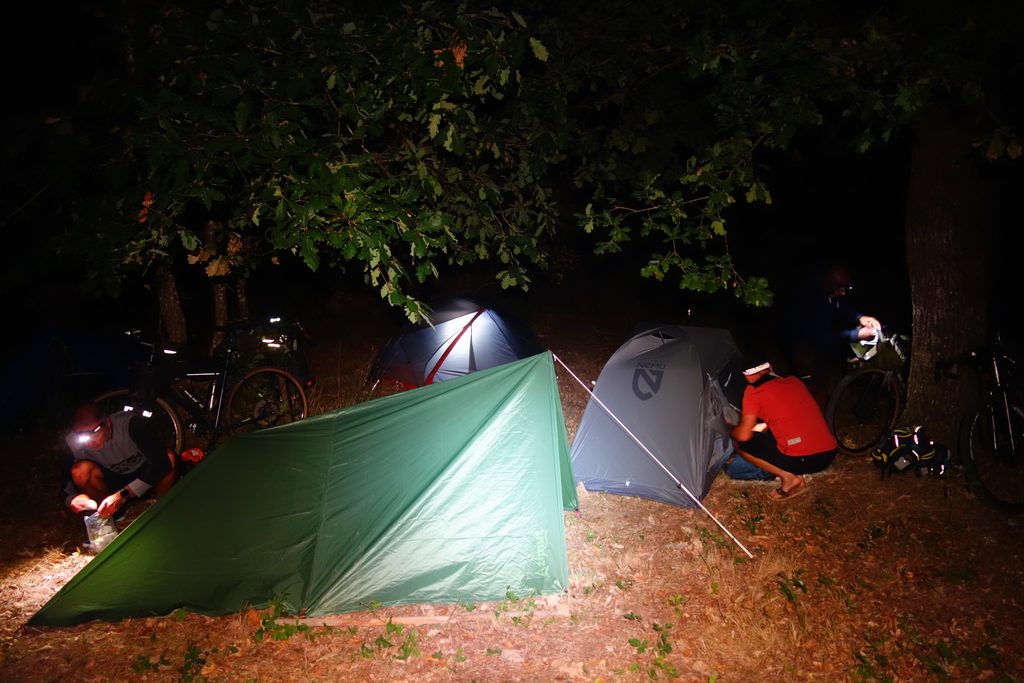
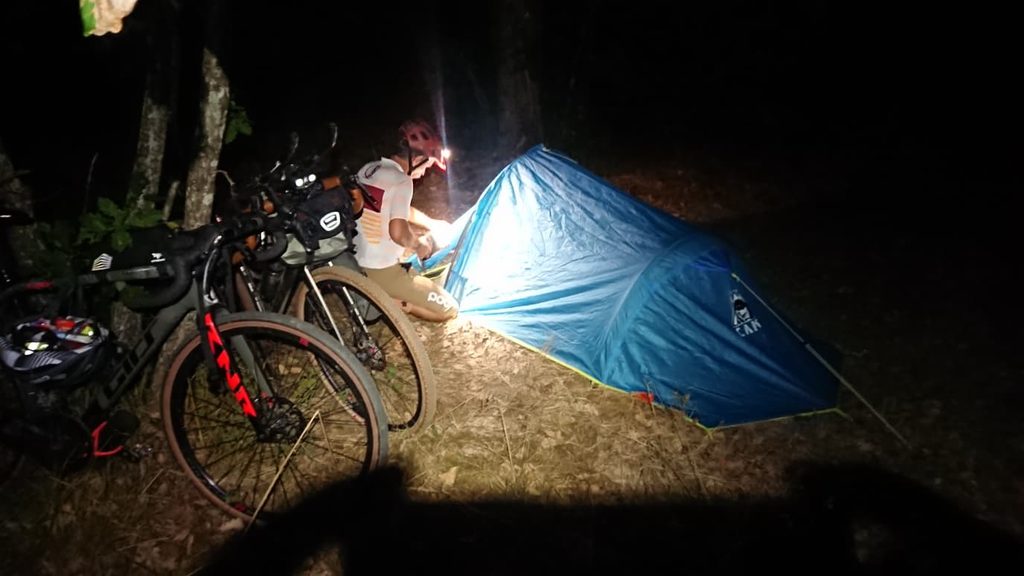
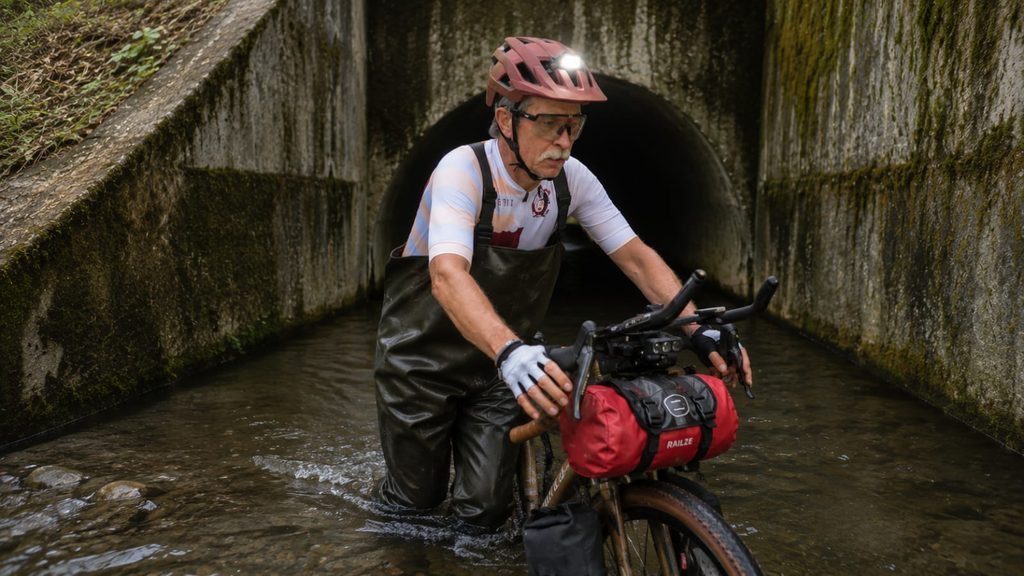
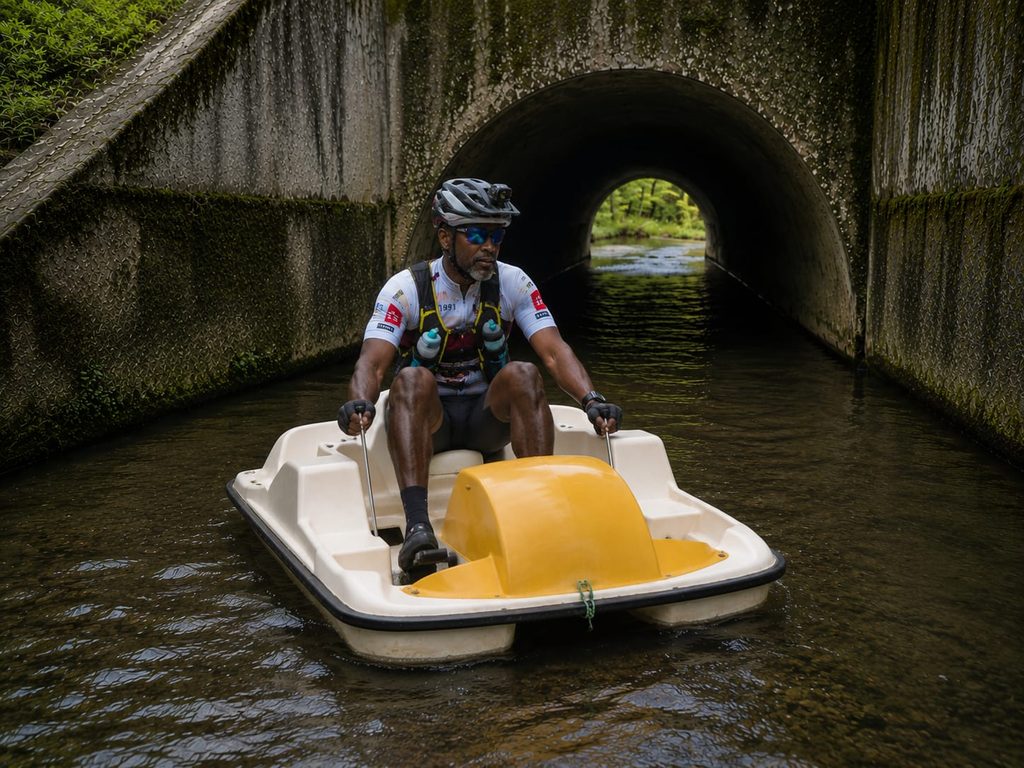
J’avais proposé vendredi soir (nuit de pleine lune) une balade semi-nocturne au départ de Saint-Sulpice pour aller bivouaquer en lisière de forêt de Giroussens et rejoindre le samedi matin Gaillac, en passant par LE (en majuscules) passage labellisé Ô Gravel. Ceux qui nous suivent doivent savoir de quoi je parle : les passages labellisés sont des passages particuliers que chacun gardera bien en mémoire une fois passé. Là c’est un canal souterrain qui amène les eaux des ruisseaux de Banis et du Rieutord sous Montans pour rejoindre le Tarn. Je le connais bien, j’y suis passé au printemps avec Julien dont le vélo a fait un refus d’obstacle ce jour-là (Julien, il va falloir y passer, ce jour-là j’avais de l’eau jusqu’au cuisses …) et je voulais le proposer aux autres camarades … Je ne pensais pas que le niveau d’eau y serait aussi haut en cette période, nous l’avons tout de même suivi, bon moment de rigolade.
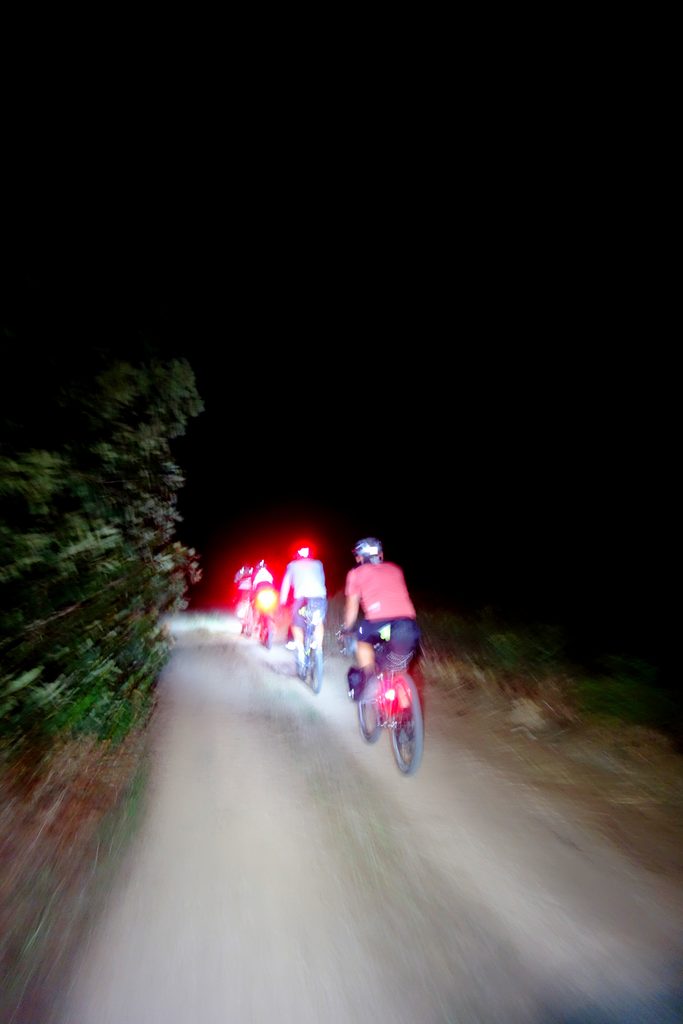
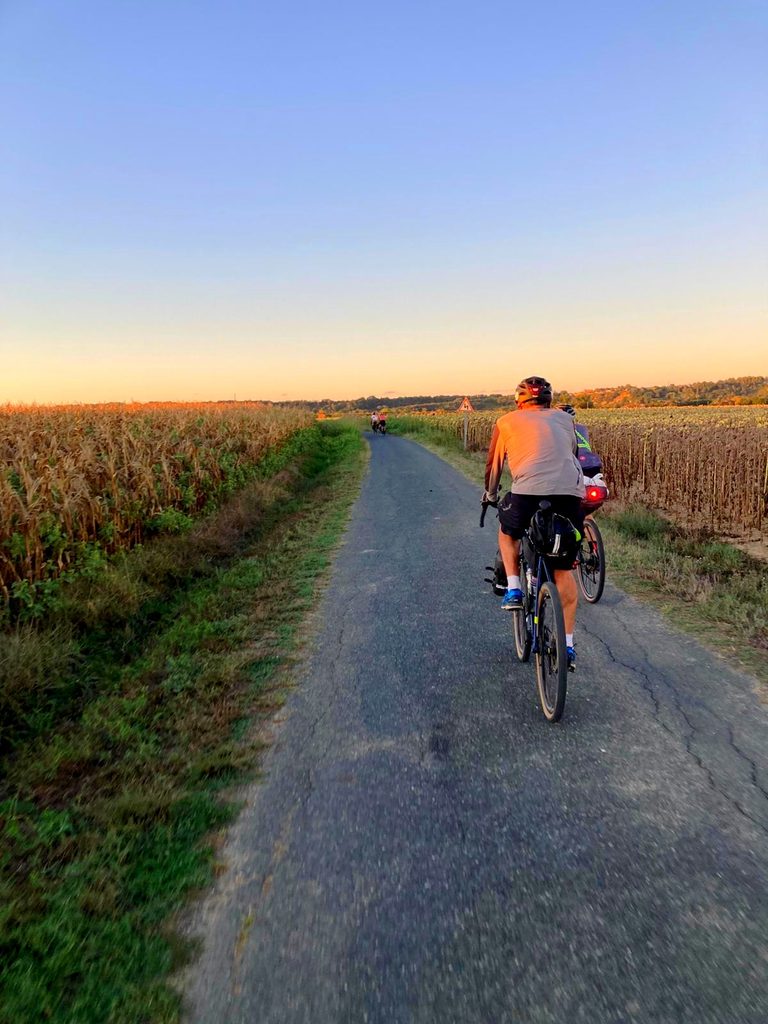
Nous étions cinq pour cette balade nocturne, je suis parti de Garidech à vélo avec Bruno pour rejoindre Gabriel (venu en train), Marcel et Pascal (véhiculés) à Saint-Sulpice.
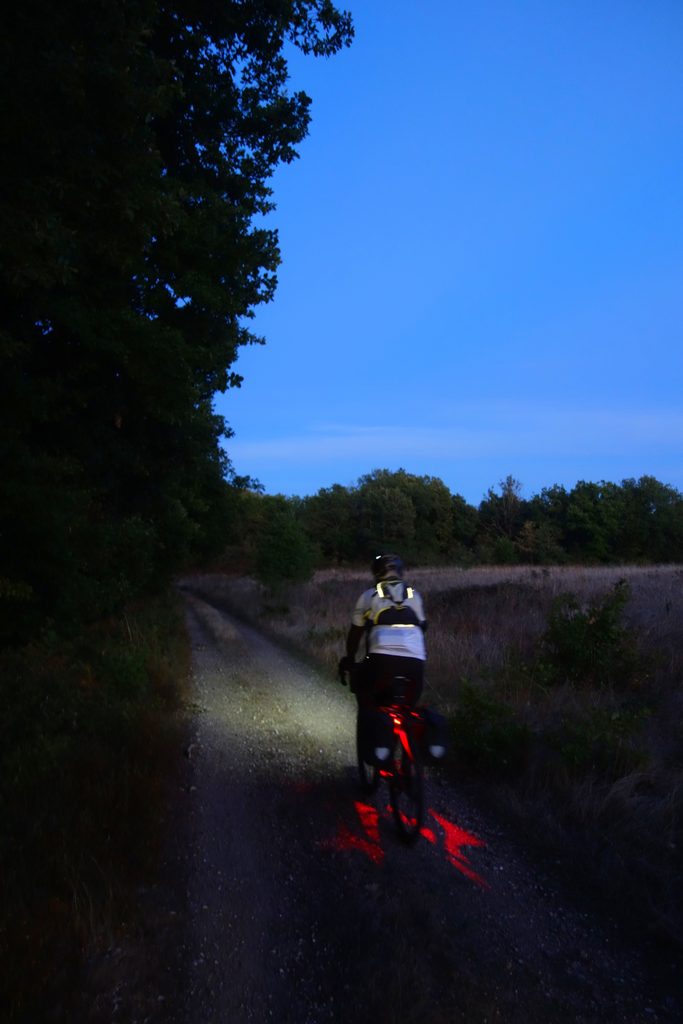
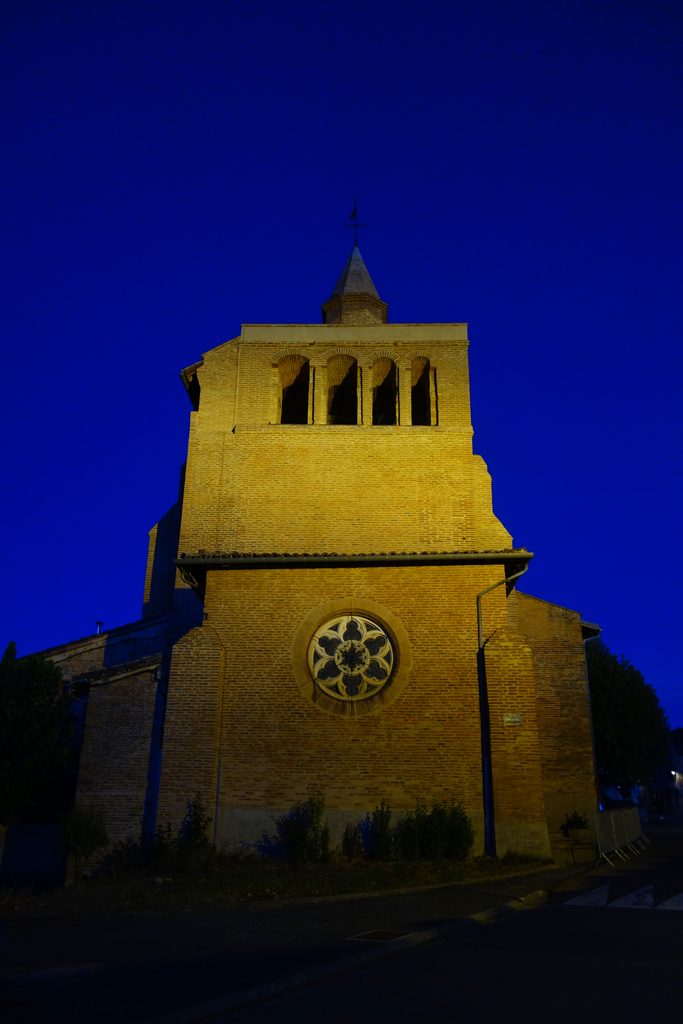
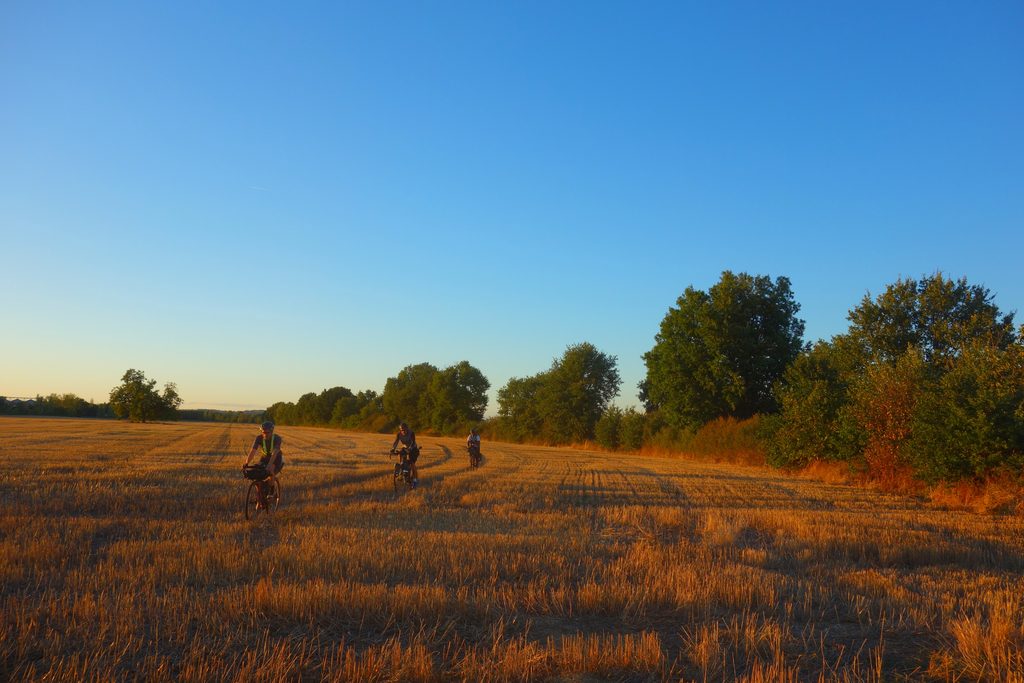
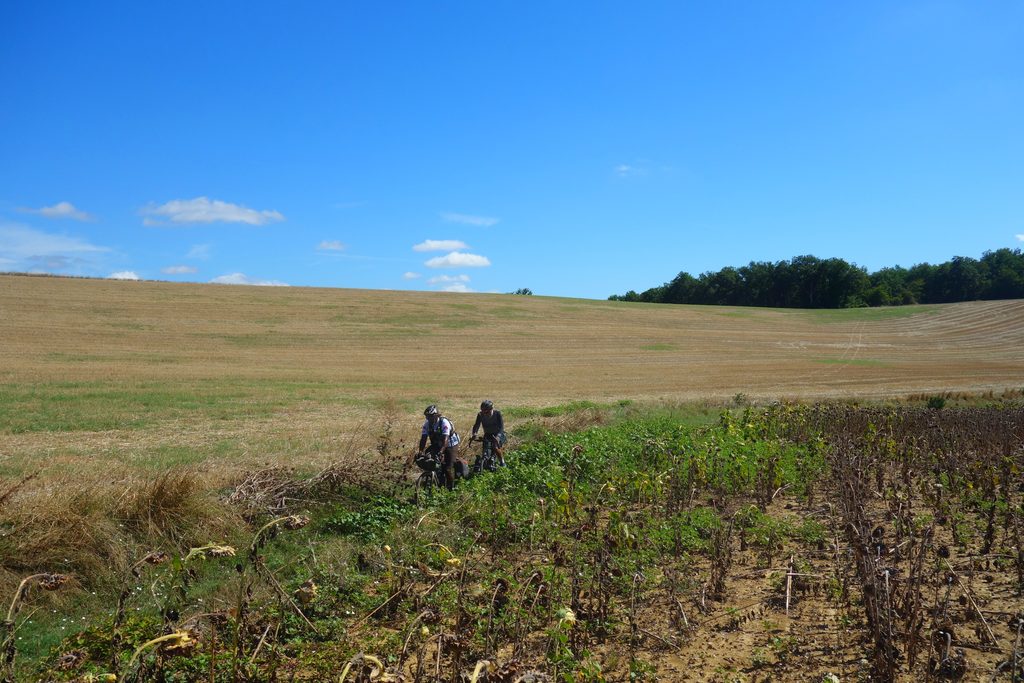
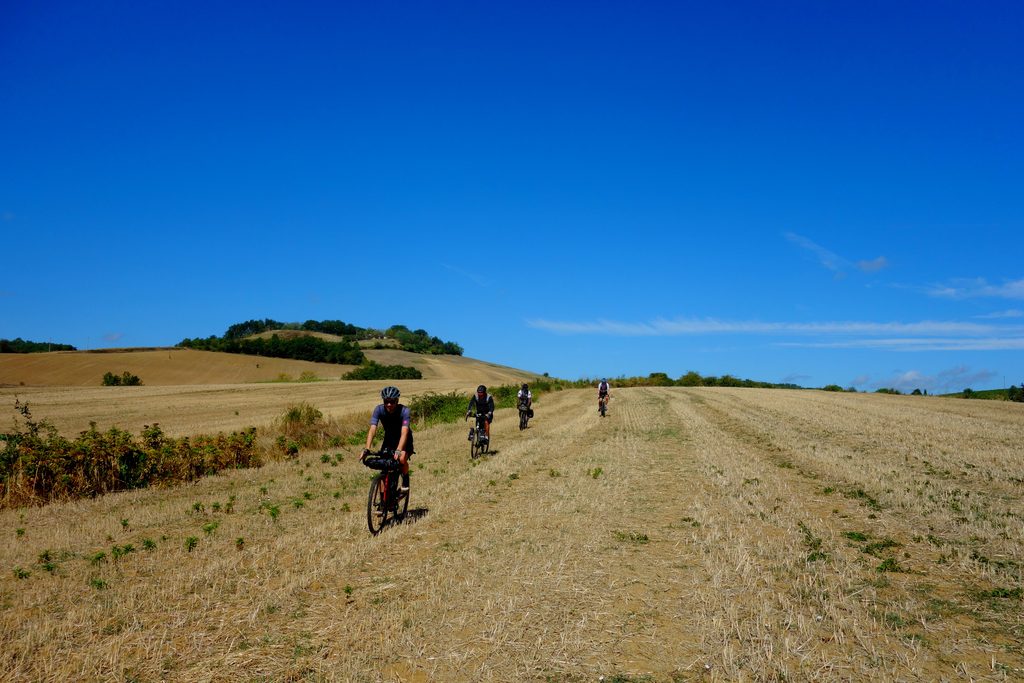
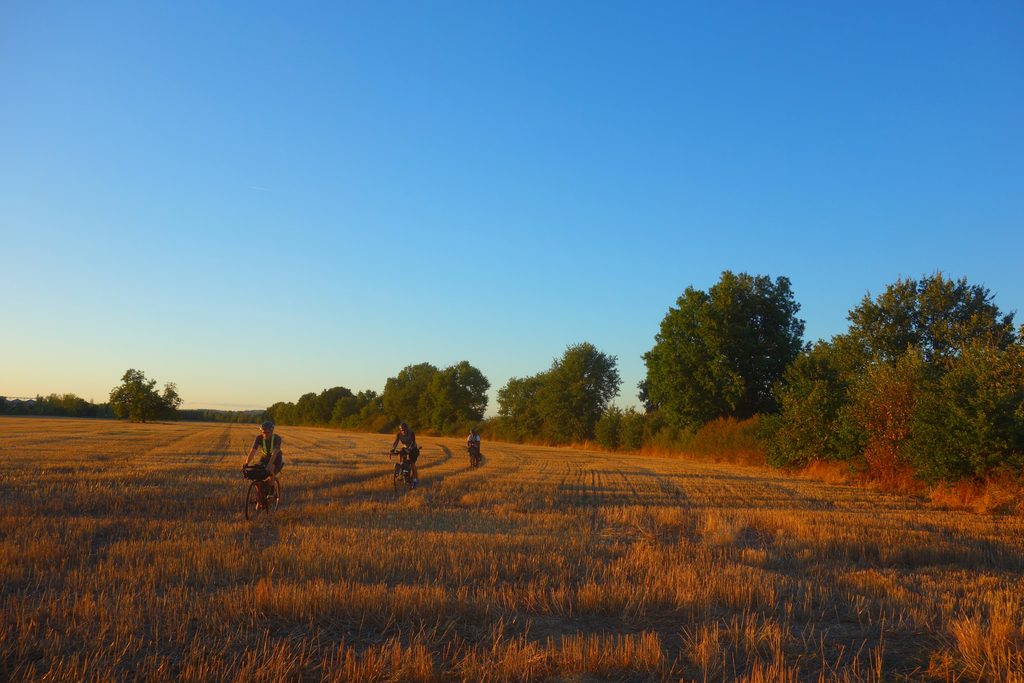
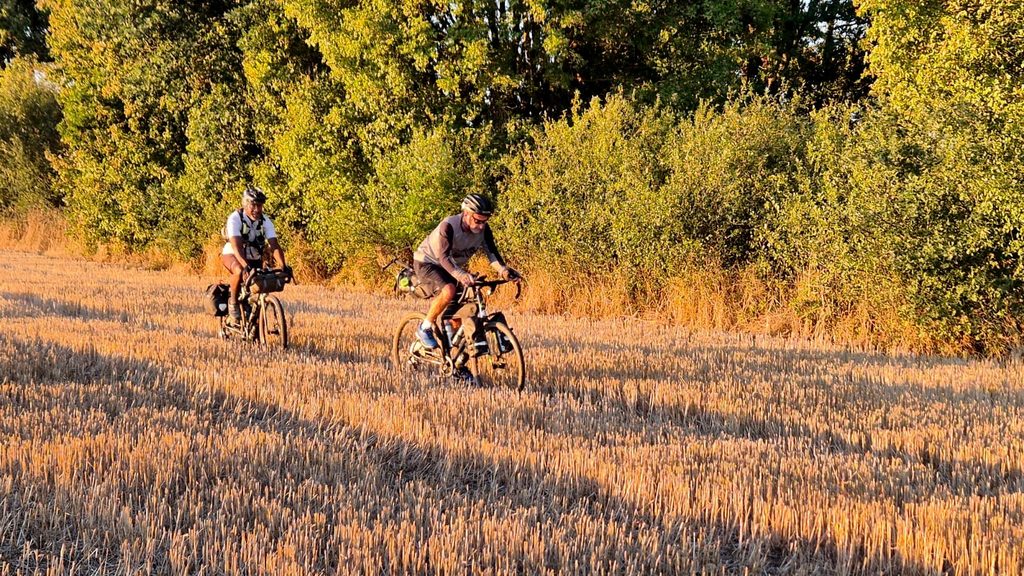
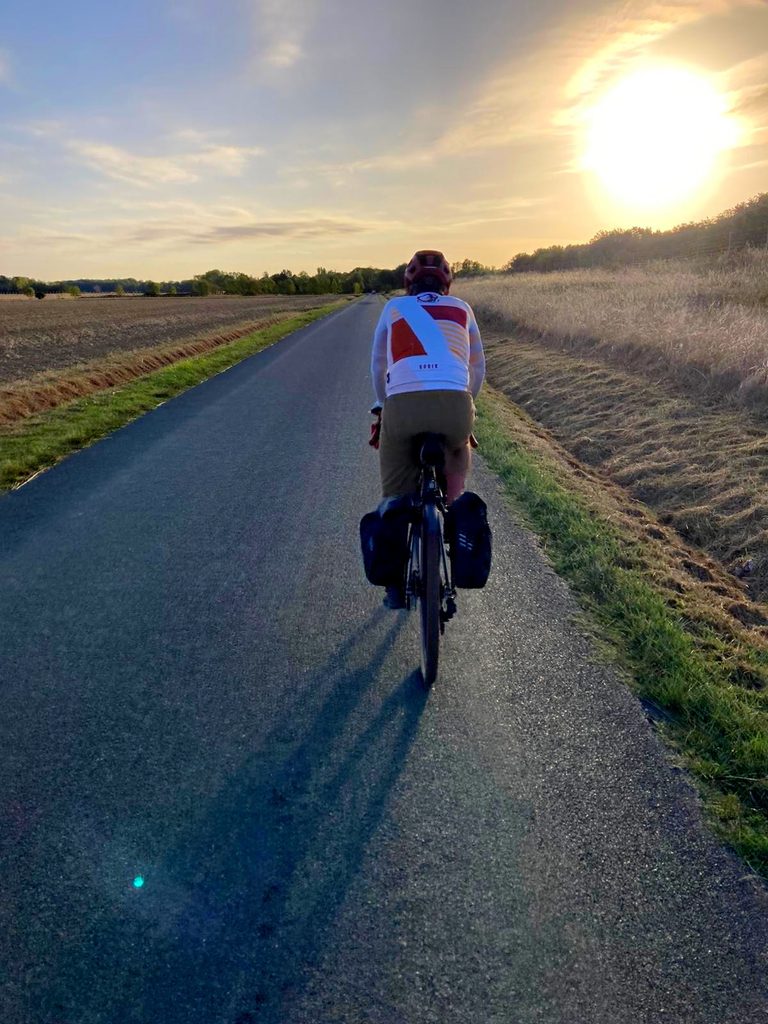
Nouveau concept chez Ô Gravel, après le Family, le Special, le Surprise, le Grand Tour, l’Occitanie, l’Éphémère ride (ou Unique ride, nous hésitons), que je pratique déjà en solo mais que je n’avais pas expérimenté en groupe, j’explique : un passage saisonnier, ici un champ moissonné que nous avons traversé en suivant les traces des engins agricoles. Si vous récupérez la trace, ne vous étonnez donc pas si vous vous trouvez face à un champ de blé, de maïs ou autre chose encore.
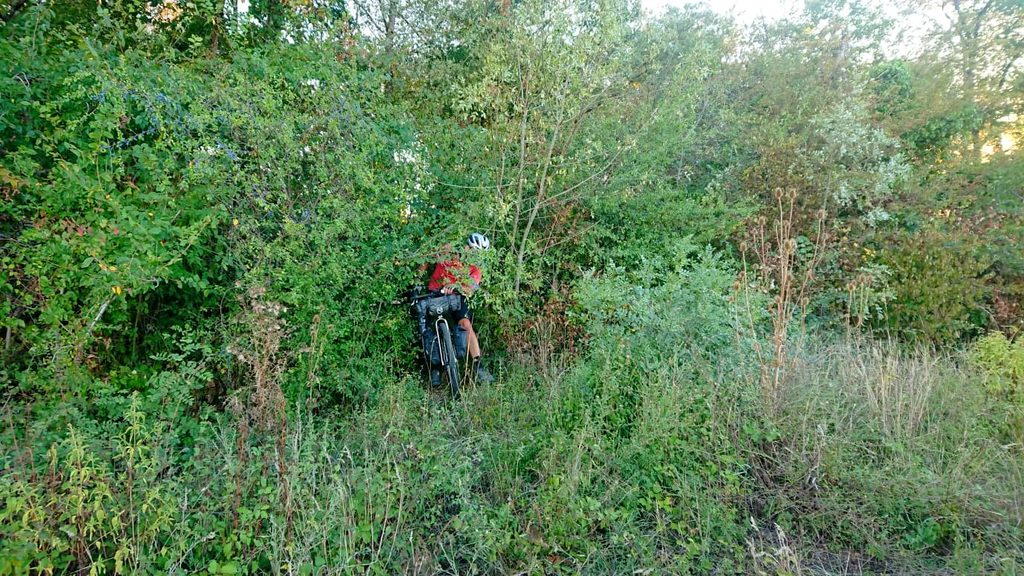
Dans le même ordre d’idée, je rappelle, même si on la partage, qu’une trace peut évoluer, qu’un chemin peut disparaître avec le temps, cela a été le cas le matin où nous avons suivi un sentier qui finira par disparaître sous la végétation, il n’est visiblement plus emprunté … Et que personne à part soi ne pourrait être tenu responsable en cas de pépin sur une trace récupérée.
Jérôme est venu hier matin de Toulouse à vélo, nous l’avons retrouvé sur le parcours.
Petit-déjeuner, belle balade, snack à Gaillac où nous ont rejoint Alain, Alphonse, Rémi et Antoine pour la balade de l’après-midi.
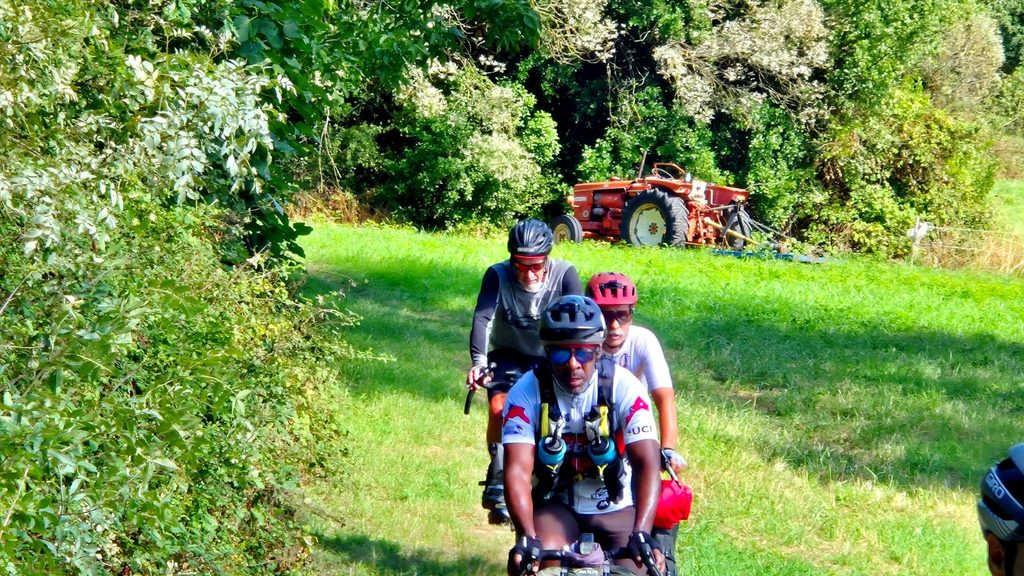
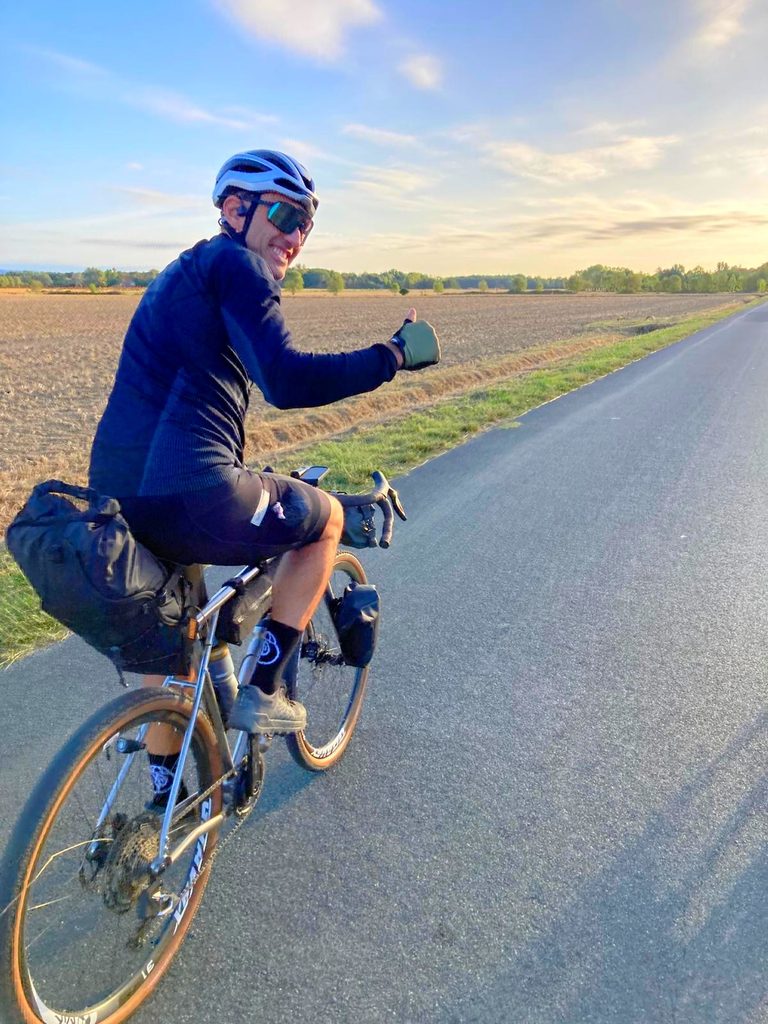
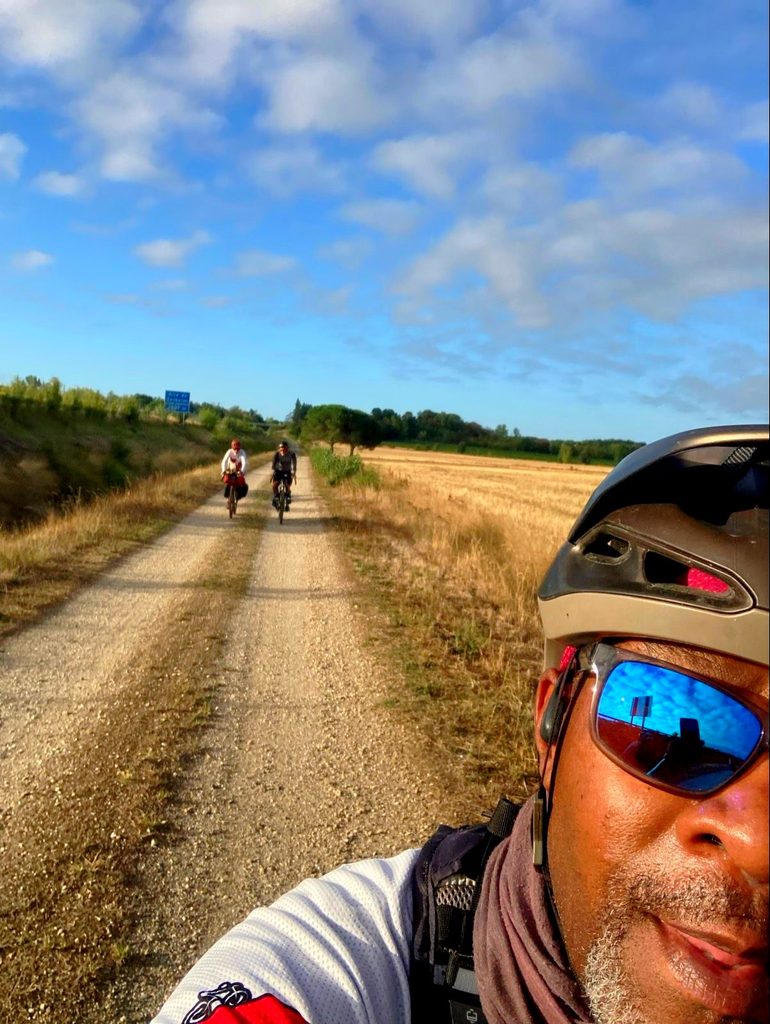
Convivialité et sport riment toujours dans nos sorties Ô Gravel, nous passons un bon moment ensemble, discutons, plaisantons, profitons des beaux terrains où nous posons nos roues … Le sport est là, l’effort aussi, nous comptons dans nos rangs de vrais compétiteurs et des habitués des raids longue distance … Je donne toujours des bons de sortie à mi-parcours pour ceux qui souhaitent appuyer plus fort encore su les pédales ou qui ont des impératifs horaires. Chacun peut s’y retrouver et quand je peux aussi je propose une distance intermédiaire avec des portions communes. Là je n’ai pas puisque que Castelnau-de-Lévis où je voulais faire passer tout le monde était le point le plus éloigné du tracé.
Ô Gravel va se diversifier encore, sans aucune intention mercantile, il est bon de le noter.
C’est en passant à côté de Cestayrols et en voyant une pancarte indiquant ce camping naturiste de La Couliche qu’un de nos membres (qui a d’ailleurs l’intention de briguer la présidence de l’association) a lancé l’idée d’une section « Nu Gravel », si vous êtes intéressés je ne manquerai pas de vous mettre en relation. Nu Graval, attention à la chute …
Le passage labellisé nous a donné l’idée d’ouvrir des section « Pédalo-Gravel », « Gravel-pêche » et « Gravel plongée ». Le vélo aquatique façon pédalo existe déjà, le packrafting aussi, nous allons essayer de trouver notre propre pratique …
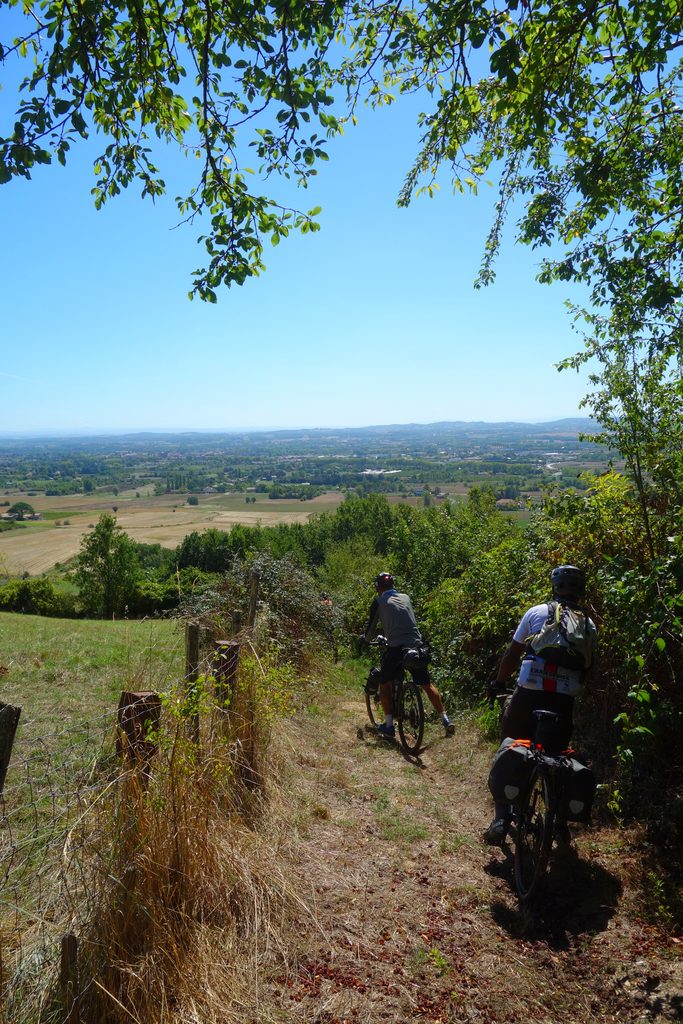
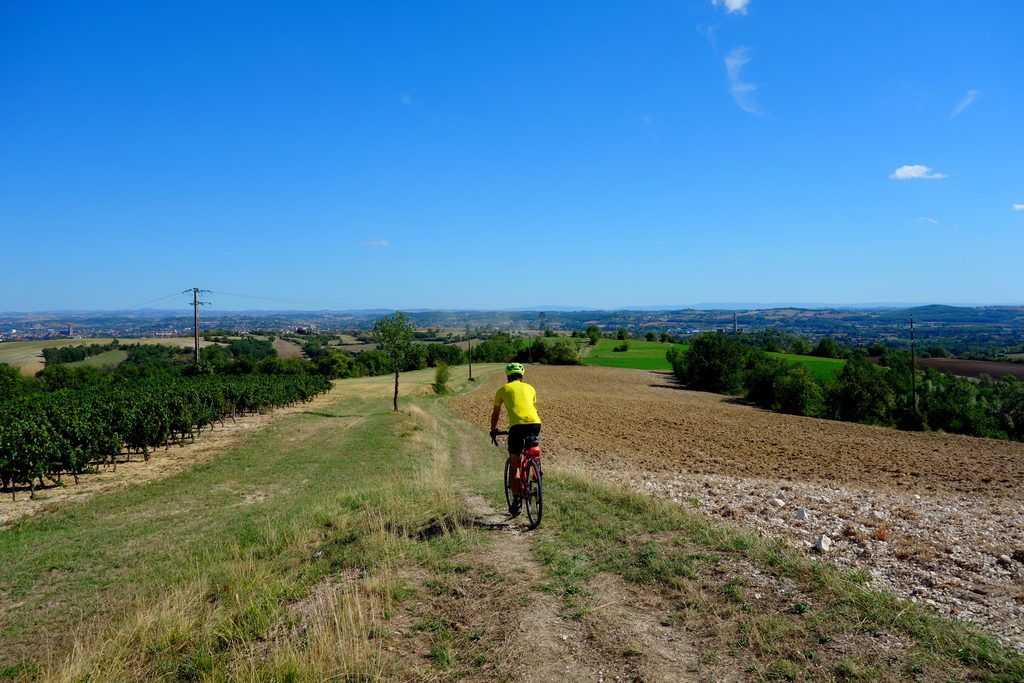
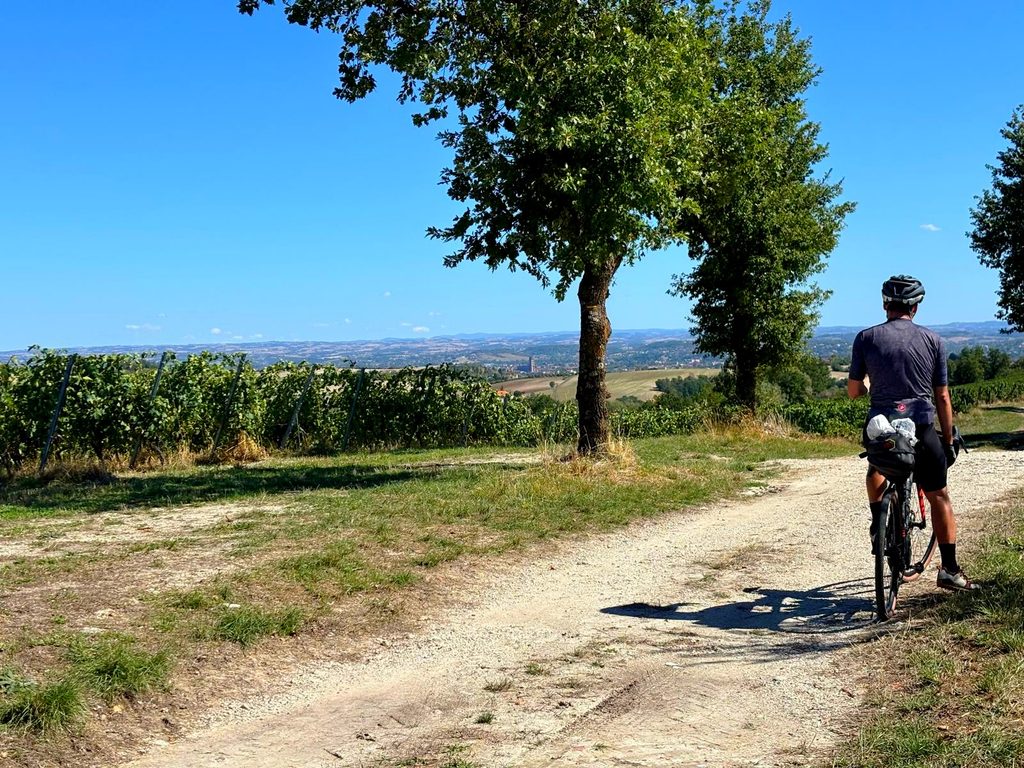
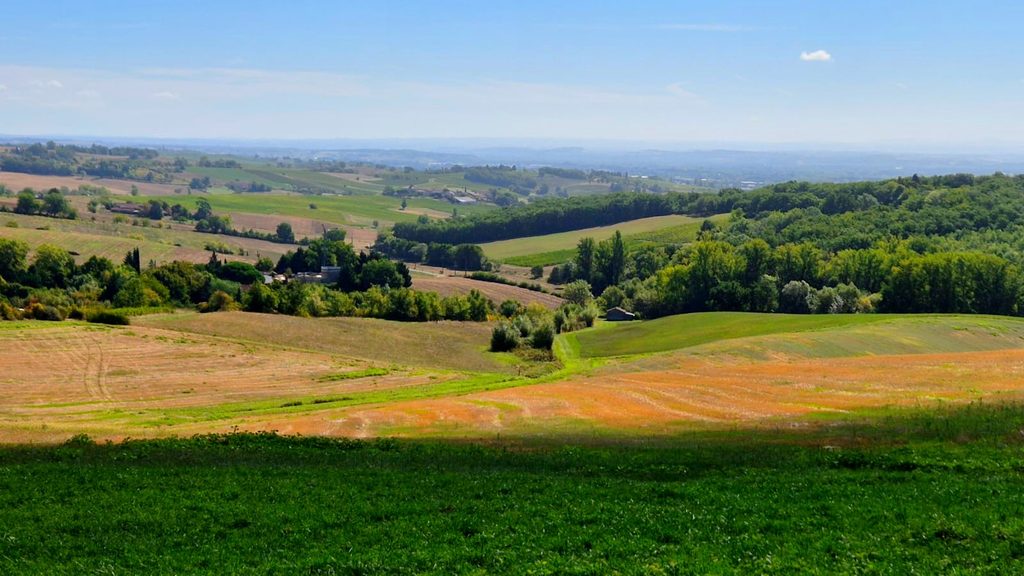
Castelnau-de-Lévis était donc le point d’orgue de la balade de l’après-midi, les pistes pour le rejoindre sont vraiment magnifiques, certaines suivent des lignes de crêtes offrant de superbes panoramas sur les vallées et les massifs environnants ou plus lointains, Montagne Noire ou Pyrénées. Castelnau surplombe aussi Albi et en offre une belle vue.
Certains ont pris le train pour rentrer, ont rejoint Saint-Sulpice pour récupérer un véhicule, j’avais prévu de rentrer à Garidech à vélo. J’ai donc quitté Alain et Alphonse après Castelnau-de-Lévis et la trace pour traverser le Tarn à Marssac-sur-Tarn et rouler au plus près de la rivière sur la Véloroute de la Vallée du Tarn et quelques portions Gravel.
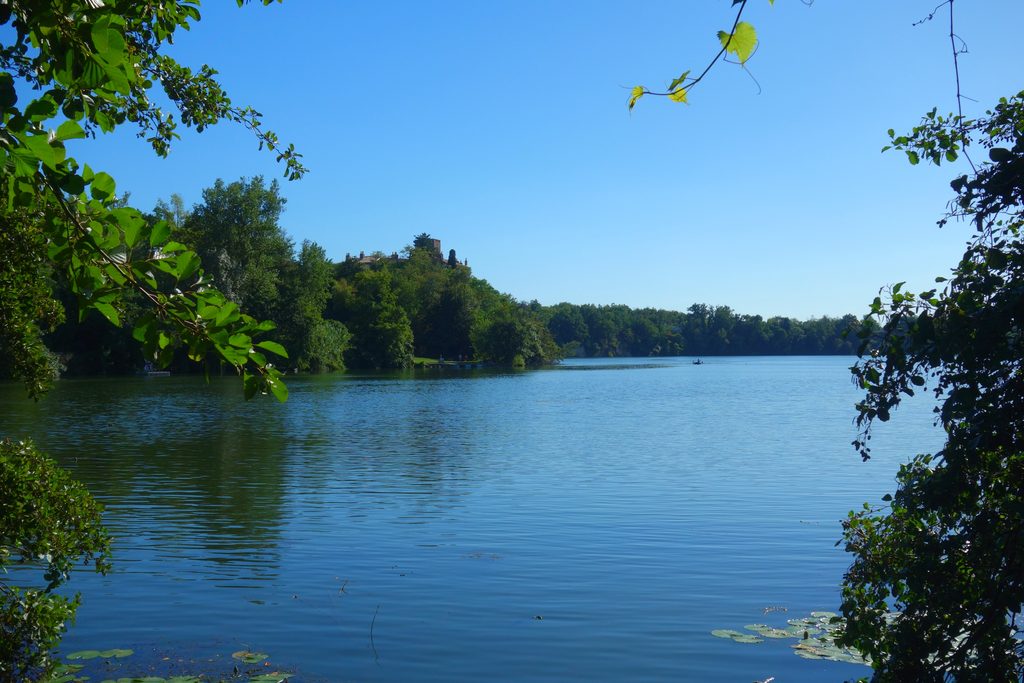
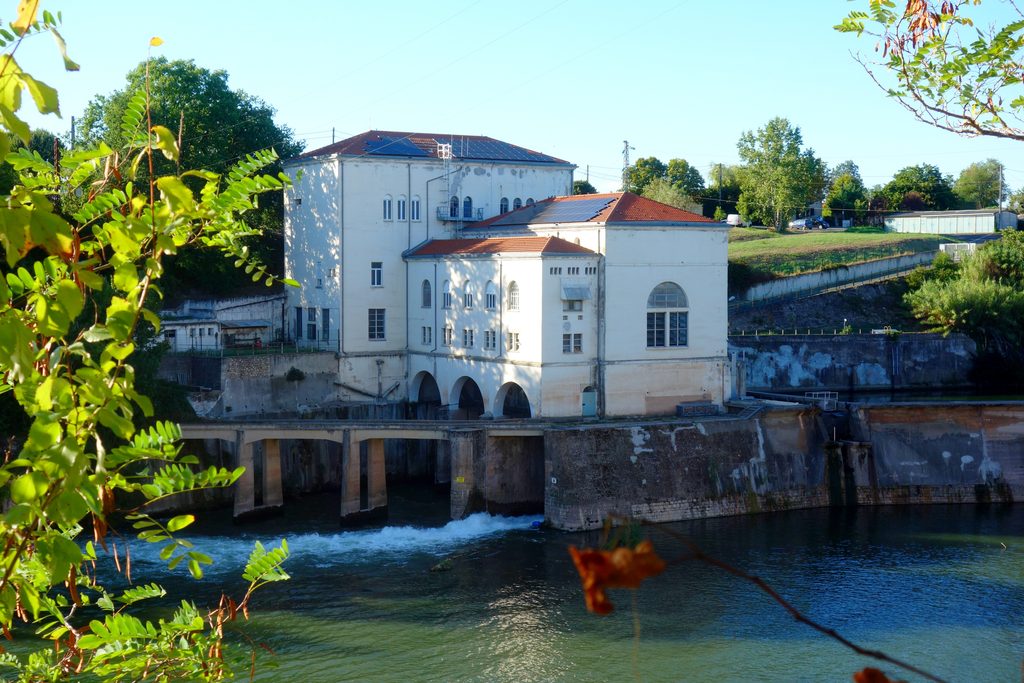
C’est à ce moment que j’ai ressenti de forts maux de ventre et un petit mal de tête. Je ne sais pas si c’est l’eau des cimetières ou fontaines publiques qui en seraient la cause (les camarades n’ont rien ressenti de tel) ou un coup de chaud, toujours est-il que ça m’a cassé les jambes et que pédaler est devenu assez compliqué, le petit vent de face n’arrangeant rien … J’ai tenu jusqu’à Couffouleux après 35 km, ça allait être très très long, j’ai appelé Bastien qui est venu jouer au bon samaritain et m’a ramené en voiture à la maison … Jolies vues sur le Tarn à Lagrave (face à Aiguelèze) ou du côté du barrage hydroélectrique de Brens …
Encore une belle journée (une soirée et une nuit aussi) en très bonne compagnie avec Ô Gravel ! N’hésitez pas à nous rejoindre si vous partagez notre vélosophie …
Thierry
La trace / The track : https://www.visugpx.com/YFadmpYHL9
Photos et vidéos partagées …
Ô Gravel Family: a challenging ride + special rides around Gaillac and a little further afield – before and after – Also in French
I’d marked two rides starting from Gaillac in my diary for 29 August.
Gaillac is renowned for its vineyards; the surrounding hillsides and villages are also very pretty, and there’s no shortage of hiking trails – some take you up to higher ground, offering superb panoramic views. The terrain is varied: grassy tracks, dirt tracks, a few snow-covered tracks, a bit of gravel in places, and not too many technical sections.
Both suggested rides partly follow signposted hiking trails (notably the Hauts de Gaillac, the Sentier des Quatre Châteaux, Entre Vignobles et Châteaux, and the GR 46). The morning family route is taken from the (excellent!) guidebook ‘Boucles à vélo autour de Toulouse’ published by Éditions Chamina. It could be described as quite challenging (around 350 metres of cumulative elevation gain over some twenty kilometres) and, unlike what I usually try to do, I hadn’t prepared an alternative route for the children or for adults who aren’t quite as fit… Had it been necessary, I would have suggested a second, more family-friendly route with just one climb; the morning ride featured three with fairly steep gradients, but the views and the paths are truly worth the detour, and when you have to work for them, it’s even more rewarding!
A mix of quiet country lanes and grassy tracks – with few stones in the morning – winding through vineyards (the grape harvest has begun), farmland and woodland.
We always feel the need to compare an experience or a place with something familiar. I often refer to the Pic de Nore as the ‘Ventoux of the Montagne Noire’ because the weather at the summit can be very changeable.
There are well over thirty ‘Venices’ in France: the Poitevin Marshes are the ‘Green Venice’, La Canourgue the ‘Venice of Lozère’, Montargis the ‘Venice of the Gâtinais’, Amiens the ‘Venice of the North’, Narbonne the ‘Venice of the Mediterranean’, and so on.
A few years ago, the joint authority bringing together the tourist regions of Gaillac and Cordes-sur-Ciel created the ‘Occitan Tuscany’ brand to promote 81 municipalities in the west of the Tarn. The choice referred to the landscapes of vineyards and cypress trees, the hilltop villages and the medieval heritage.
The Italians did not take kindly to this diversion of tourism and marketing; a full-blown diplomatic row over the matter pitted Italy against France, even reaching the floor of the European Parliament. Finally, in November 2023, the association changed its official name to ‘Gaillac, Cordes-sur-Ciel & Cités médiévales’, largely due to ‘Italian misunderstandings’. However, the ‘La Toscane Occitane’ tourism brand was retained.
I know this region well; I am particularly fond of it. It needs no comparison, and even though certain similarities link it to Italian Tuscany (the very hilly landscape, the vineyards, the hilltop villages), cypress trees are virtually non-existent in France (for me, they are a true symbol of Tuscany) and we have no ‘strade bianche’ – or very few… ‘Venice’, ‘Colorado’, ‘Tuscany’ certainly sell well… Don’t we have a Provençal Colorado or some ‘Little Canadas’ here in France?
This area, which I prefer to call the Tarn bastides, is well worth a detour and a stop: it is rich in both natural beauty and history. In fact, it’s a château that I wanted to highlight – the one at Castelnau-de-Lévis, so distinctive with its square tower… I’d often spot that odd silhouette from afar whilst driving along the motorway towards Albi; from a distance, it could have been mistaken for a chimney or some industrial architecture. It was thanks to cycling that I happened to pass by one day and became interested in its history…
Perched on a rocky outcrop overlooking the Tarn valley, the castle was founded in 1235 by Sicard Alaman, a powerful lord and close associate of Raymond VII, Count of Toulouse. Originally known as Castelnau-de-Bonnafous, it served as a stronghold for the Toulouse estates in opposition to the royal domain. A fortified village grew up at the foot of its walls.
The seigneury became an important barony in the Albigeois region. In the 15th century, it passed to the Armagnac family, then to the Amboise-Aubijoux family. In the 16th century, the castle was remodelled and embellished. The Revolution brought an end to the barony, and the commune temporarily took the name Castelnau-du-Tarn. The name Castelnau-de-Lévis was adopted in the 19th century, in memory of the family that had owned the seigneury.
Sold in 1818, the castle was unfortunately used as a quarry. Its ruins, dominated by an impressive tower nearly 40 metres high, were listed in 1909. The local council acquired it in 1991 and has since been working, in partnership with a heritage conservation association, on its restoration and enhancement. Today, the castle and the old village stand as a remarkable testament to the medieval history of the Albigeois region.
For once, I discovered – just like my mates – this magnificent route between Gaillac and Castelnau-de-Lévis. I spend quite a bit of time on all my routes, and this time I’d taken great care to check using satellite views and the Street View little man that the route was passable all the way through. I’m starting to get quite a bit of experience in reading maps; by combining this with satellite imagery, switching between different map backgrounds and using the Street View figure, I’m rarely disappointed…
Almost all of the cumulative elevation gain for the afternoon ride (around 650 m over 51 km) was on the way to the château; the return journey followed the Tarn as closely as possible, mostly on tarmac, partly following the Véloroute de la Vallée du Tarn between Albi and Saint-Sulpice-la-Pointe.
Five members of the association went on the morning ride, whilst five others joined them for the afternoon ride.
A special mention goes to Maison Chavanne in Gaillac, a bakery and patisserie, for the quality of its products; we stopped there for breakfast and lunch.
A little more about what happened before and after… As is often the case, the association’s members travel to the meet-ups by bike or train.
On Friday evening (the night of the full moon), I’d suggested a semi-nocturnal ride setting off from Saint-Sulpice to camp on the edge of the Giroussens forest and carry on to Gaillac on Saturday morning, passing through THE (in capital letters) section labelled ‘Ô Gravel’. Those who follow us will know what I’m talking about: the ‘labelled’ sections are special stretches that everyone will remember well once they’ve ridden them. In this case, it’s an underground canal that carries the waters of the Banis and Rieutord streams beneath Montans to join the Tarn. I know it well; I rode through it in the spring with Julien, whose bike refused to go over the obstacle that day (Julien, you’ll have to give it a go – that day the water was up to my thighs…) and I wanted to suggest it to the others… I didn’t think the water level would be so high at this time of year, but we followed it anyway – it was great fun.
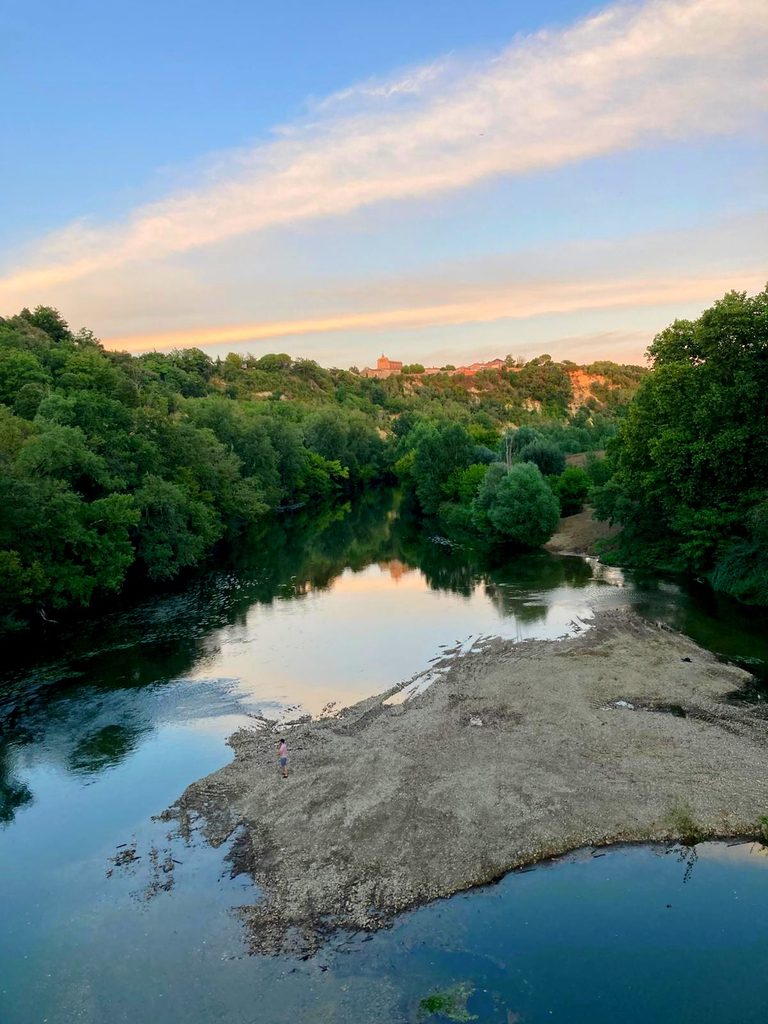
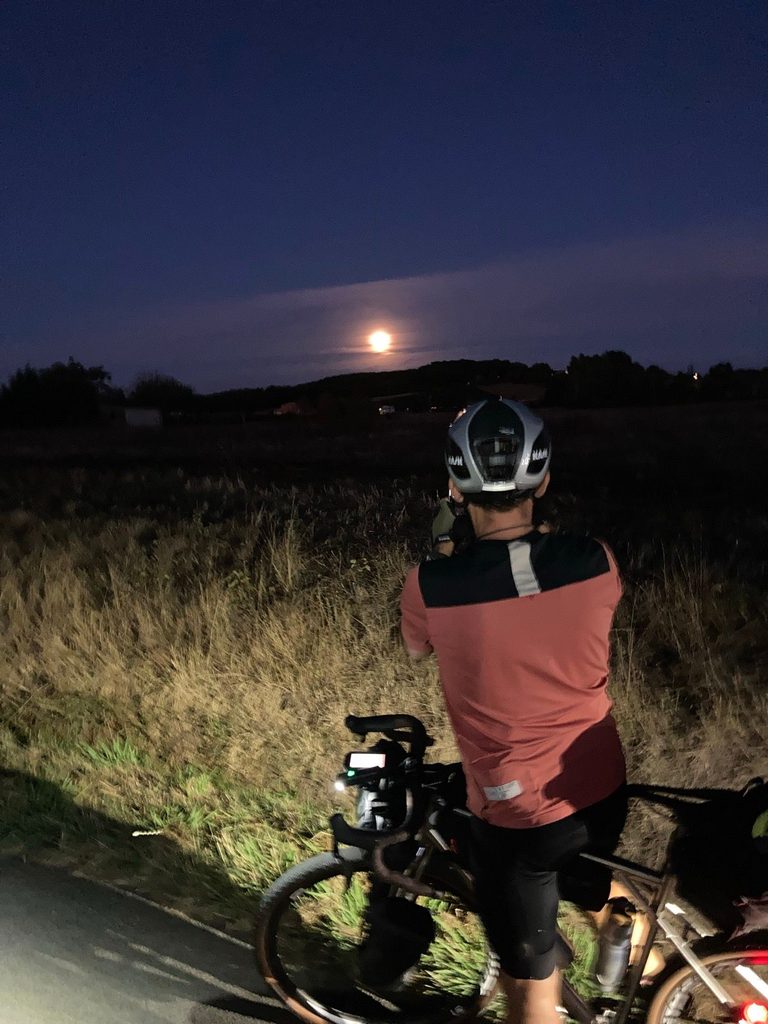
There were five of us on this night ride; I set off from Garidech on my bike with Bruno to meet up with Gabriel (who’d come by train), Marcel and Pascal (who’d been driven there) in Saint-Sulpice.
A new concept at Ô Gravel: following on from the Family, the Special, the Surprise, the Grand Tour, the Occitanie and the Éphémère ride (or Unique ride – we’re still not sure which), which I’ve already done on my own but hadn’t tried in a group. Let me explain: a seasonal route – in this case, a harvested field that we crossed by following the tracks left by farm machinery. So if you follow the route, don’t be surprised if you find yourself facing a field of wheat, maize or something else entirely.
In the same vein, I’d like to remind you – even if we’re sharing it – that a route can change, and a path can disappear over time. This was the case the other morning when we followed a track that will eventually vanish beneath the vegetation; it’s clearly no longer used… And that no one but yourself can be held responsible in the event of a mishap on a route you’ve followed.
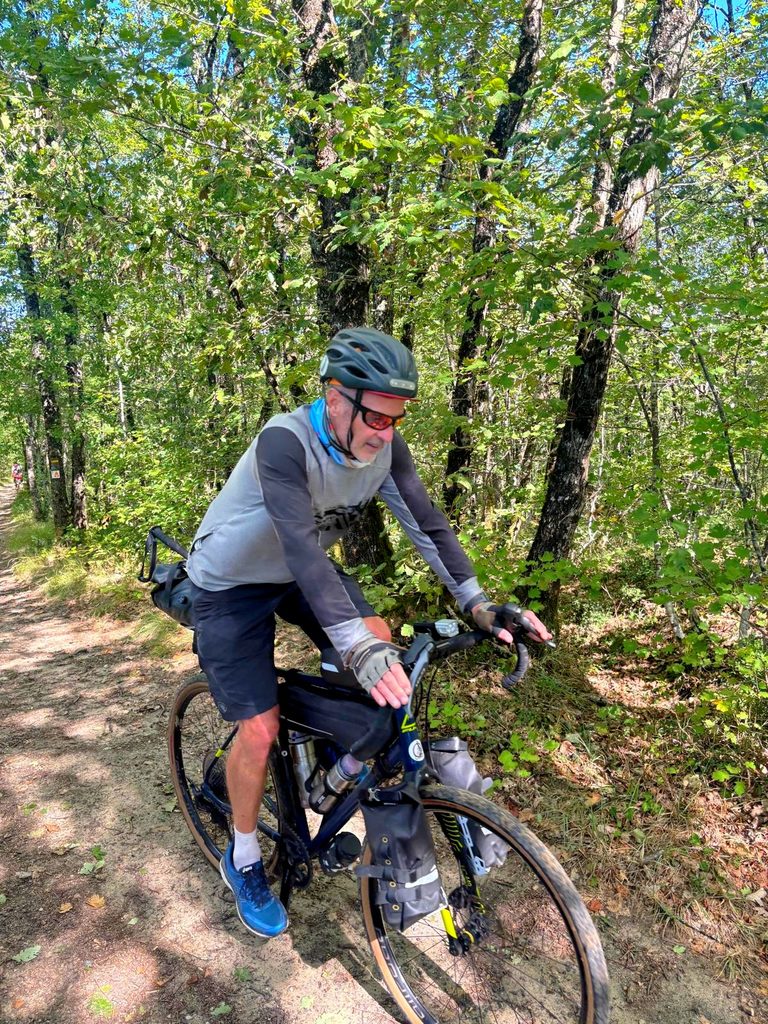
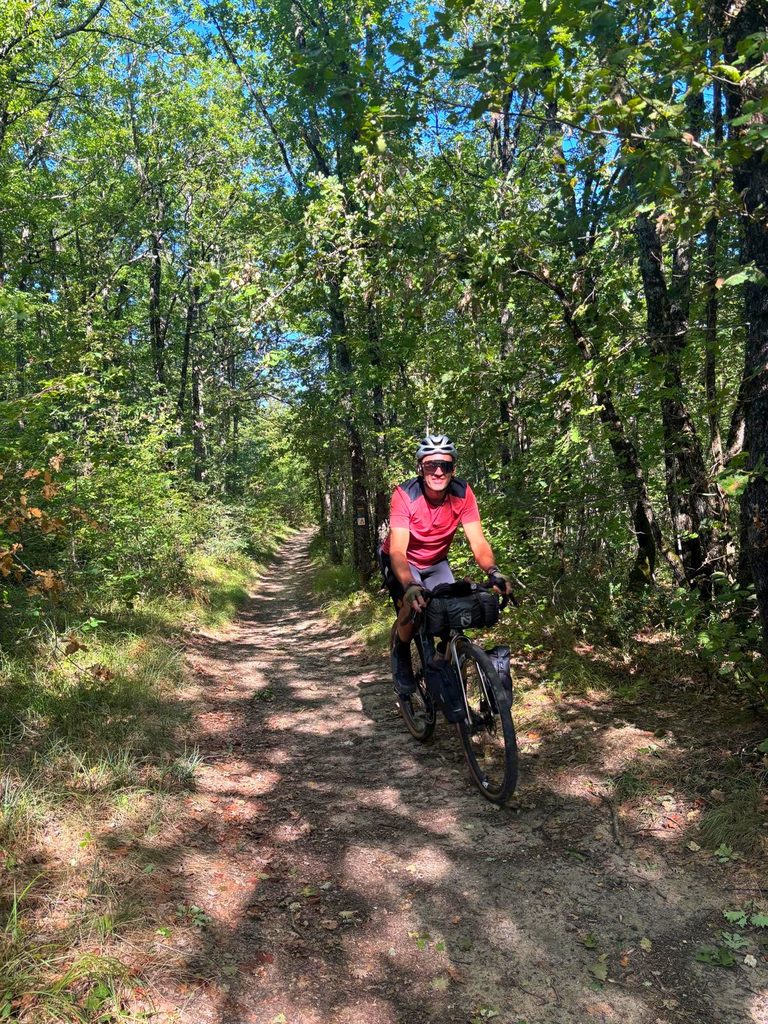
Jérôme cycled up from Toulouse yesterday morning; we met up with him on the route.
Breakfast, a lovely ride, a snack in Gaillac where we were joined by Alain, Alphonse, Rémi and Antoine for the afternoon ride.
A friendly atmosphere and sport always go hand in hand on our Ô Gravel rides; we have a great time together, chatting, joking and enjoying the beautiful terrain we ride through… Sport is part of it, as is the physical effort; our ranks include true competitors and seasoned long-distance riders… I always offer the option to drop out halfway for those who want to push even harder on the pedals or who have time constraints. There’s something for everyone, and whenever I can, I suggest an intermediate route with some shared sections. I didn’t do that this time, though, as Castelnau-de-Lévis – where I wanted everyone to pass through – was the furthest point on the route.
Ô Gravel is set to diversify further – it’s worth noting that this is done with no commercial intent whatsoever.
It was whilst passing by Cestayrols and seeing a sign for the La Couliche naturist campsite that one of our members (who, incidentally, intends to stand for the presidency of the association) mooted the idea of a ‘Nu Gravel’ section; if you’re interested, I’ll be sure to put you in touch. Nu Gravel – watch your step…
The certified route gave us the idea of setting up ‘Pedal-Gravel’, ‘Gravel-Fishing’ and ‘Gravel-Diving’ sections. Pedal-style water cycling already exists, as does packrafting; we’ll try to come up with our own take on it…
Castelnau-de-Lévis was therefore the highlight of the afternoon’s ride; the routes leading there are truly magnificent, with some following ridgelines offering superb panoramic views of the surrounding valleys and mountain ranges, as well as those further afield, such as the Montagne Noire and the Pyrenees. Castelnau also overlooks Albi and offers a lovely view of the town.
Some of us took the train back, travelling to Saint-Sulpice to collect a car; I had planned to cycle back to Garidech. So I left Alain and Alphonse after Castelnau-de-Lévis and set off along the route to cross the Tarn at Marssac-sur-Tarn, cycling as close as possible to the river on the Tarn Valley Cycle Route and a few gravel sections.
It was at this point that I started to feel severe stomach pains and a slight headache. I don’t know if it was the water from the cemeteries or public fountains that caused it (my mates didn’t experience anything like it) or a bout of heat exhaustion, but the fact remains that it sapped my strength and cycling became quite a struggle, with the light headwind making matters worse… I managed to keep going until Couffouleux after 35 km; it was going to be a very, very long ride, so I rang Bastien, who came to the rescue and gave me a lift home… Lovely views of the Tarn at Lagrave (opposite Aiguelèze) and around the Brens hydroelectric dam…
Another lovely day (and evening and night too) in excellent company with Ô Gravel! Do feel free to join us if you share our ‘cycling philosophy’ …
Thierry
Translated with DeepL.com (free version)
2 réponses
Bonjour, comment peut on avoir les traces svp?
ça m’intéresse beaucoup !
Merci par avance,
Pierre
Le repérage par satellite et la traversée du champ moissonné montrent deux limites différentes d’une trace partagée. Pour refaire la liaison vers Castelnau-de-Lévis, il faudrait donc vérifier autant la continuité des chemins que la saison du passage.